Understanding why your body responds the way it does — and why that's often a sign it's working.
Short answer: GLP-1 medications slow how quickly food leaves your stomach and strengthen fullness signals in your brain. This is how they reduce appetite and portion size — and it's also why side effects happen.
You feel full faster and for longer
Pressure and acid exposure increase (causing nausea or heartburn)
Food has more time to ferment (causing bloating or sulfur burps)
Eating and drinking less can lead to constipation or fatigue
Side effects are most common when starting or increasing doses and usually improve as the body adapts. For most people, they are a sign the medication is working — not that something is wrong.
Full explanation belowPractical guide · 5 min read
Five plain, cost-free strategies that consistently take the edge off — drawn from analysis of 1,100+ user-reported experiences across the GLP-1 community.
Short version: GLP-1 medications slow the rate at which food leaves the stomach.
This process is called gastric emptying.
That slowdown is not a side effect. It is one of the main ways these medications work.
To understand side effects, it helps to understand what normally happens when you eat.
This process is carefully coordinated between the stomach, the gut, and the brain.
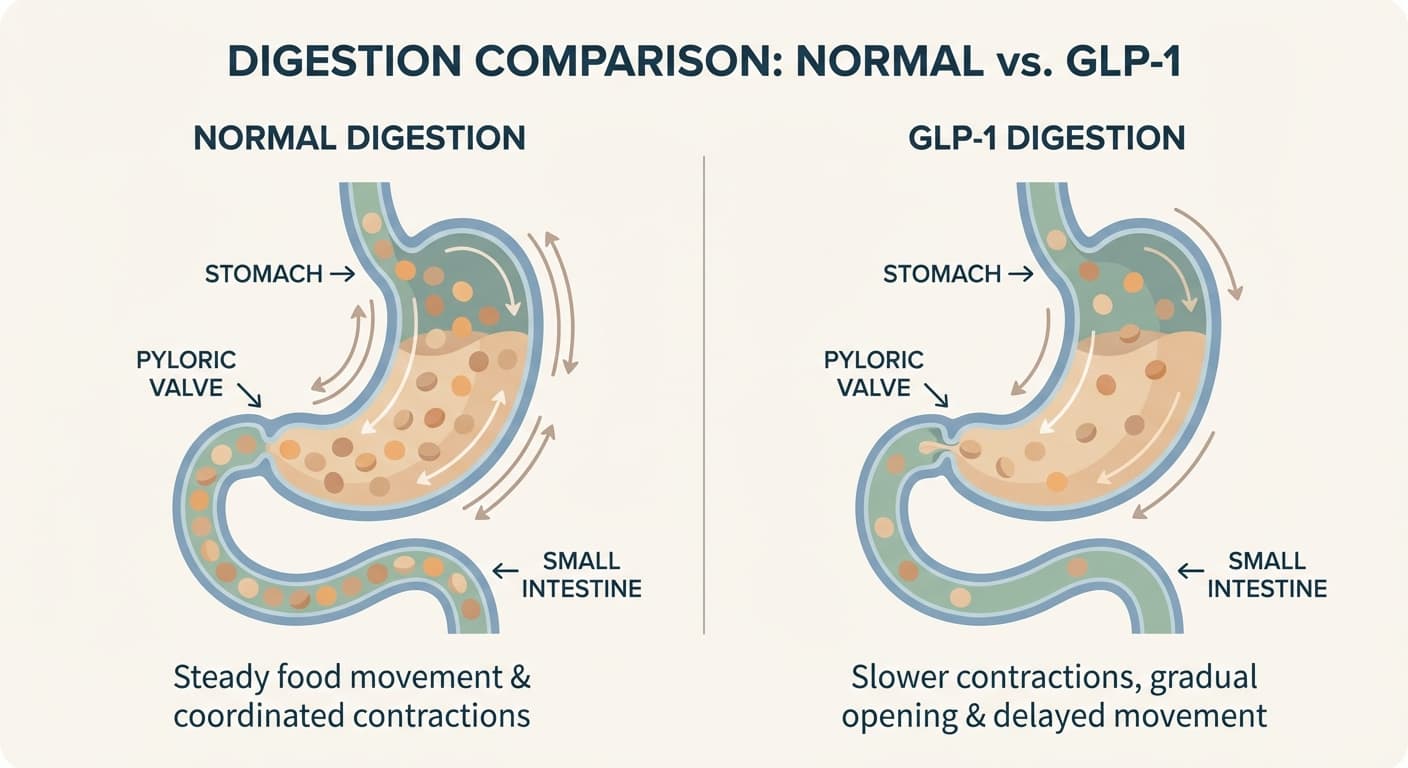
GLP-1 medications don't shut digestion down. They slow and regulate it more tightly through the nervous system. They do this in three main ways.
GLP-1 medications reduce how strongly and how often the stomach pushes food toward its exit. The stomach still works — it just works more slowly and deliberately.
The opening between the stomach and the small intestine acts like a valve. GLP-1 medications increase the tone of this valve, so food is released more gradually.
GLP-1 medications act on appetite centers in the brain to:
Food remains in the stomach longer than usual because the stomach moves food forward more slowly, the exit opens more gradually, and the brain reinforces fullness signals.
These effects are intentional features of GLP-1 medications and are major contributors to reduced appetite and weight loss.
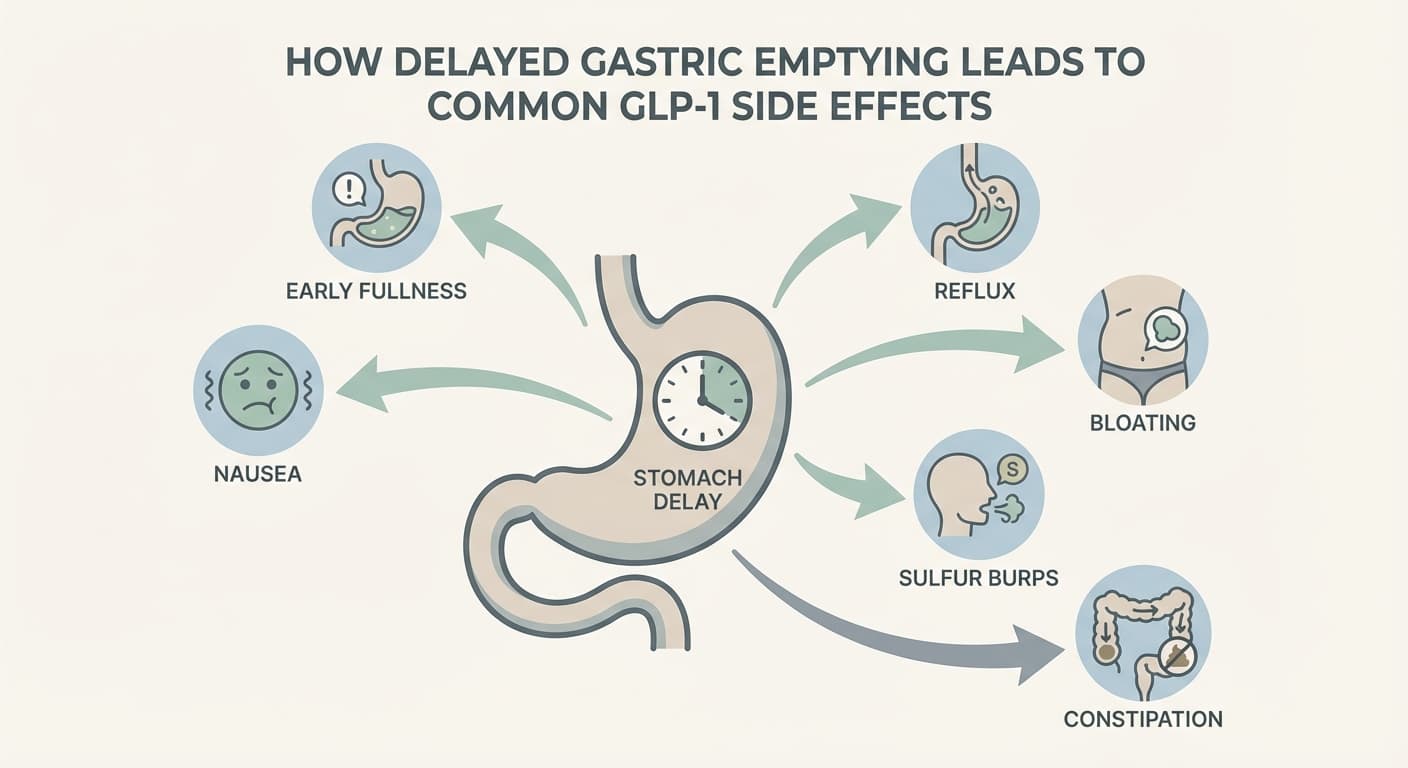
Once digestion slows, a predictable set of effects can follow.
Because food from previous meals hasn't fully cleared, even small amounts can create a strong sense of fullness.
Pressure inside the stomach increases, acid remains in contact longer, and reflux risk rises.
If the stomach becomes overly stretched or irritated, the body may trigger vomiting. This usually reflects temporary intolerance while the body adapts.
Food that stays longer has more time to ferment, producing gas including sulfur-containing compounds. This is where "egg burps" come from.
Constipation tends to show up weeks into treatment because people eat less overall and digestion slows throughout the gut.
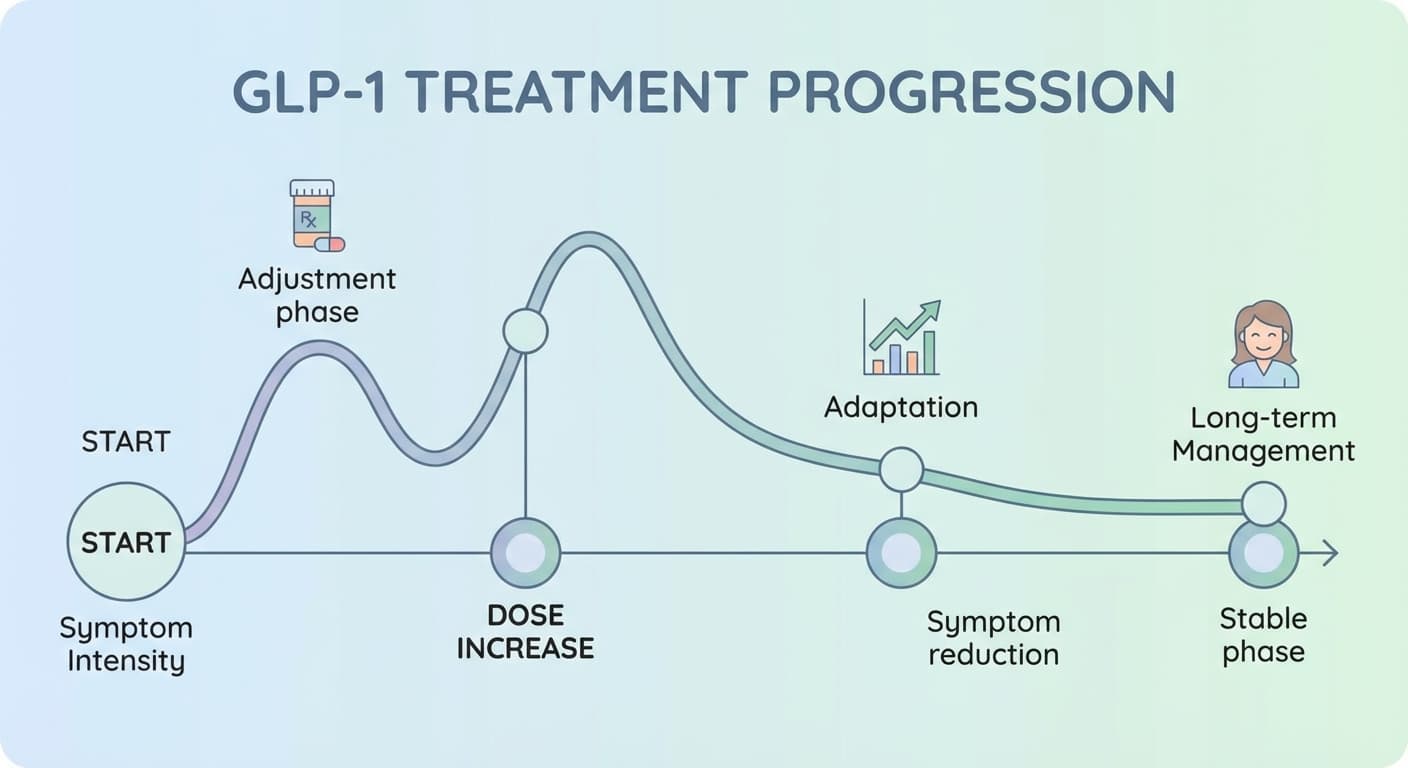
Side effects are most likely to flare when starting the medication, after dose increases, or when appetite drops quickly. Each increase slows digestion a bit more, and the stomach needs time to adjust.
Nothing broke. Your digestive system is adapting.
Even on the same medication and dose, experiences vary widely. Tolerance depends on:
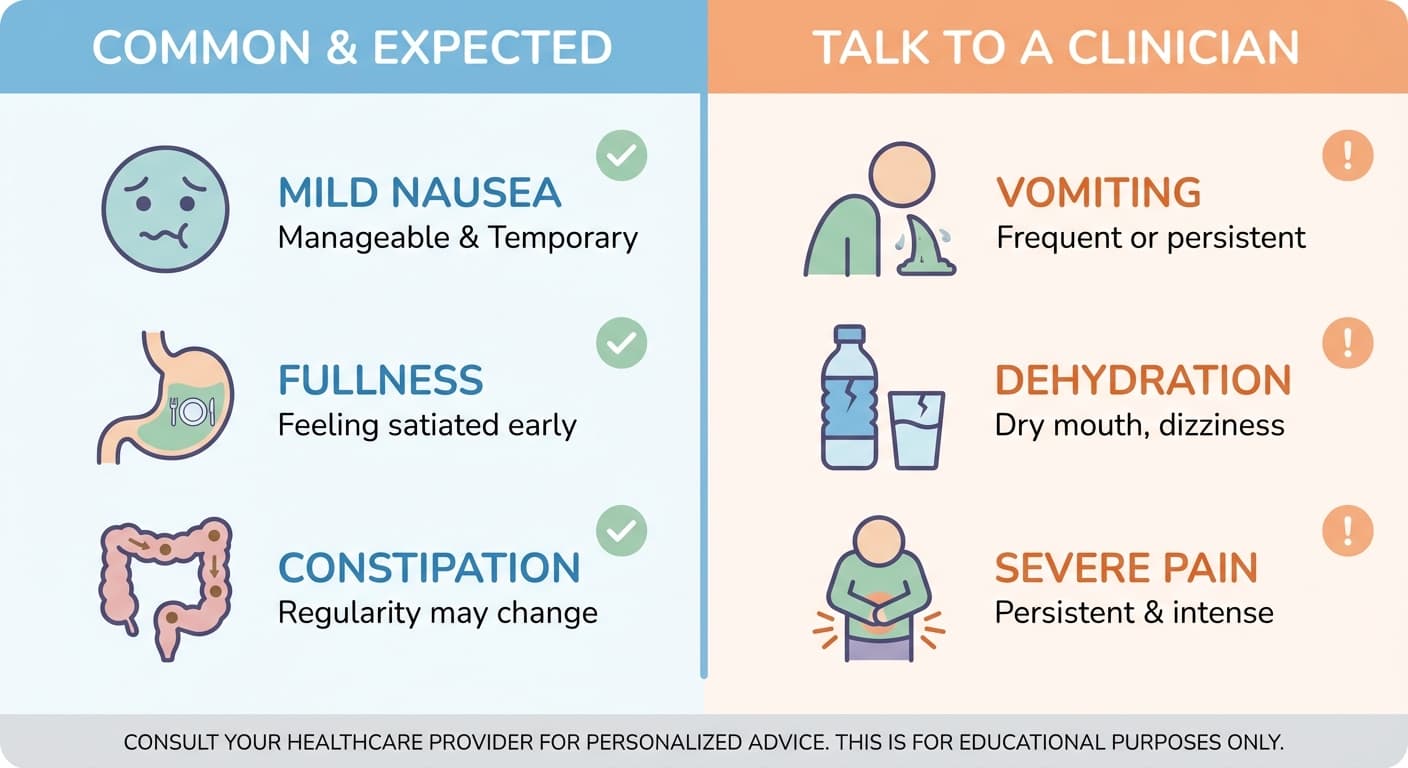
Most GLP-1 side effects are not a sign something is wrong. They're a sign that:
In other words, the medication is doing what it's designed to do — sometimes faster than the body can comfortably adjust. Understanding this turns anxiety into confidence.
GLP-1 medications slow how quickly food leaves the stomach and strengthen fullness signals in the brain. Most side effects result from food staying in the stomach longer and from reduced overall intake of food and fluids. Symptoms are most common when starting treatment or increasing doses and usually improve as the body adapts. Differences between people reflect normal variation in digestion and eating patterns rather than medication toxicity.
Molecule-level experience
Brand-specific context
Use our interactive Side Effect Explorer to compare patient-reported side effect rates across 7 GLP-1 medications.
Open Side Effect ExplorerInformational Only: This content is for educational purposes and does not constitute medical advice. Always consult with a qualified healthcare provider about your specific situation.
Last Updated: January 2026 | Reviewed by: AllGLP1 Editorial Team