Tirzepatide Month 1: What Really Happens Each Week
Starting tirzepatide? Here's the honest breakdown of what you'll actually experience week by week, from side effects to appetite changes to realistic weight loss expectations.
Before You Take That First Shot
You've got your prescription, watched the injection videos three times, and cleared out your fridge of trigger foods. Now what? Let's walk through what actually happens during your first month on tirzepatide, because the reality is messier (and more manageable) than you might think.
Most people start on 2.5 mg weekly for their first month. That's not the therapeutic dose – it's training wheels for your digestive system. The goal isn't dramatic weight loss yet; it's getting your body used to the medication without making you miserable.
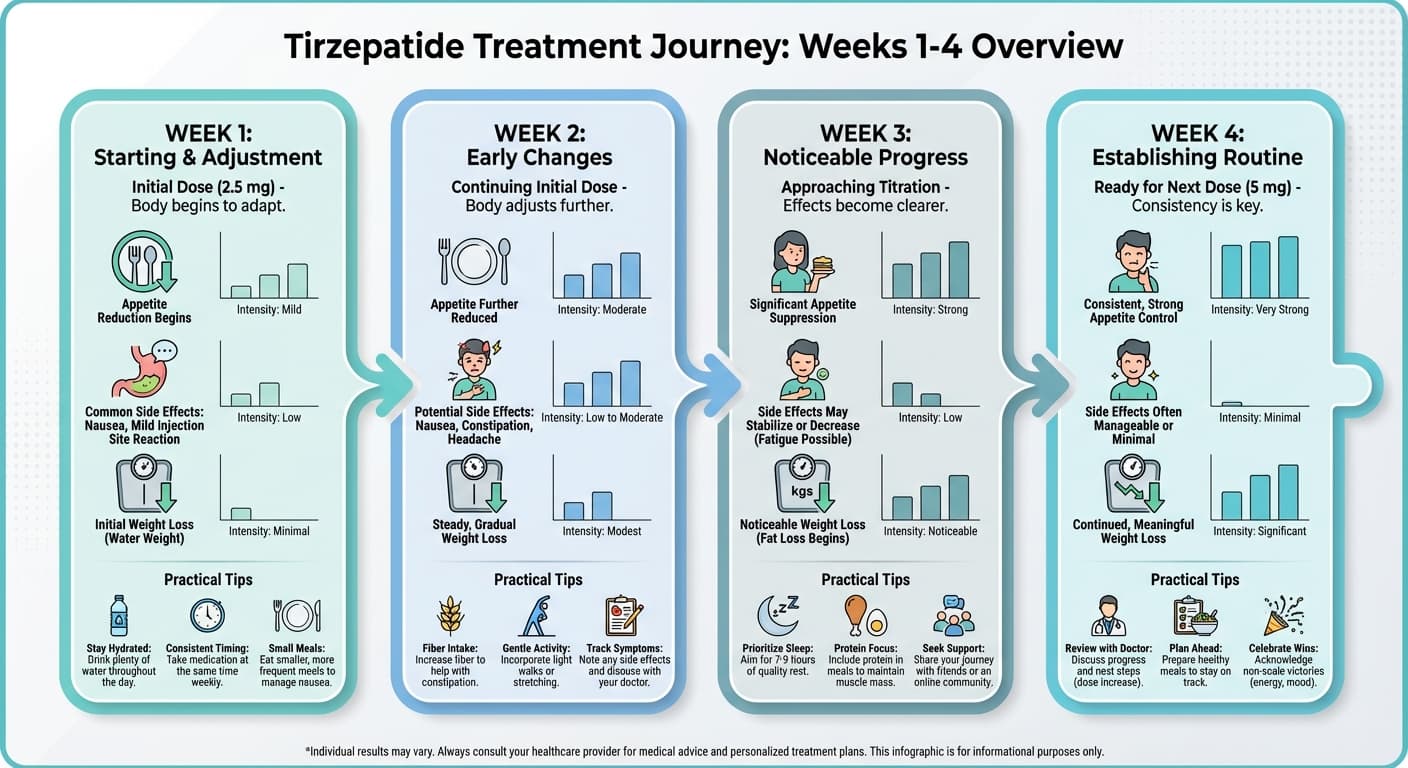
Week 1: The Honeymoon (Maybe)
Some people feel nothing the first week. Others notice their appetite dial down within 48 hours. There's no "right" way to respond, but here's what's common:
Your stomach might feel different – not necessarily nauseous, just... aware. Like you can sense it in a way you usually don't. Food thoughts become quieter for many people. That constant mental chatter about what to eat next? It often dims significantly.
Real talk: Don't expect much weight loss this week. Your body is figuring things out. Some people lose 2-3 pounds from reduced food volume, others maintain or even gain a pound from eating differently.
The side effects, if they show up, are usually mild at this dose. Maybe some mild nausea, especially if you eat too much or too fast. Your digestion might slow down – things just take longer to move through.
Week 2: Reality Sets In
This is when most people start noticing consistent appetite suppression. Food portions that seemed normal last month now feel overwhelming. You might find yourself leaving food on your plate for the first time in years.
Nausea becomes more common in week 2, especially in the first day or two after your injection. Here's what helps: eat smaller portions, avoid greasy foods, and don't drink a lot of fluids with meals.
Some people hit their first plateau here. The scale might not move for several days, which can be frustrating. Remember – tirzepatide works differently than diet culture taught you to expect. Your body is adjusting its hunger and satiety signals, not just burning through water weight.
Energy levels vary wildly. Some people feel more stable energy from eating regularly throughout the day. Others feel tired as their bodies adjust to fewer calories.
Week 3: Finding Your Rhythm
By week 3, you're probably developing new eating patterns. Maybe you're naturally doing intermittent fasting because you're just not hungry for breakfast. Or you're discovering that protein keeps you satisfied for hours longer than it used to.
This is often when the side effects peak at the 2.5 mg dose. Nausea, constipation, and fatigue are most common. The good news? Your body is learning. Each week typically gets easier.
Weight loss becomes more consistent for most people. You might see 1-2 pounds per week, though some lose more and others less. The people losing faster aren't necessarily doing better – everyone's metabolism and starting point are different.
Food aversions can develop. Suddenly, foods you used to love taste too rich or just unappealing. This is normal and often temporary as you adjust.
Week 4: Preparing for the Next Level
Your last week at 2.5 mg often feels the most "normal." Side effects usually calm down, and your new eating patterns feel more natural. You're probably eating 30-40% less than you were before starting, without the constant willpower battles.
This is a good time to assess what's working. Are you drinking enough water? Getting adequate protein? Moving your body in ways that feel good? These habits matter more as you increase your dose.
Most people lose 4-8 pounds during their first month, though the range is wide. Some lose more, especially if they started at a higher weight. Others lose less but notice significant changes in cravings and eating behaviors.
Managing Side Effects Like a Pro
The honest answer about side effects: they're manageable but real. Here's what actually helps:
For nausea, eat something small and bland before it hits. Crackers, toast, or plain rice work well. Don't try to push through on an empty stomach.
Constipation is common because everything slows down. Increase water, add fiber gradually, and consider a gentle stool softener. Don't go from zero to high-fiber overnight – that'll make things worse.
Fatigue often improves once you establish regular eating patterns. Your body needs consistent fuel, even if it's less than before.
What Most People Don't Realize
The mental shift is often more dramatic than the physical changes in month one. That constant food noise – thinking about your next meal, fighting cravings, negotiating with yourself about portions – it gets quieter. Some people describe it as finally understanding what "normal" hunger feels like.
Your relationship with food will likely change faster than the number on the scale. You might find yourself leaving restaurants with leftovers, forgetting to eat lunch, or naturally choosing lighter options without conscious effort.
Setting Realistic Expectations
Month one is about adaptation, not transformation. You're building the foundation for long-term success. The dramatic weight loss stories you see online? They're real, but they typically happen over months, not weeks.
Most people feel significantly different by week 4 – less obsessed with food, more in control, and optimistic about continuing. The scale might show 4-8 pounds lost, but the mental changes often feel more valuable.
If you're considering Zepbound specifically, the experience is the same since it's the brand name for tirzepatide. The medication works identically regardless of which version you're prescribed.
Looking Ahead
As you prepare to increase to 5 mg in month two, remember that this process isn't linear. You'll have better weeks and harder weeks. The goal is progress, not perfection.
Your first month is about learning – how your body responds, what foods work best, how to manage side effects, and what realistic progress looks like for you. That knowledge becomes the foundation for everything that follows.
The people who succeed long-term treat their first month as valuable data collection, not a pass-or-fail test. Every experience – even the challenging ones – teaches you something useful about living with this medication.