The Complete Guide to Uses, Benefits, Side Effects & More
Everything you need to know about this dual-action medication for Type 2 diabetes and weight management.
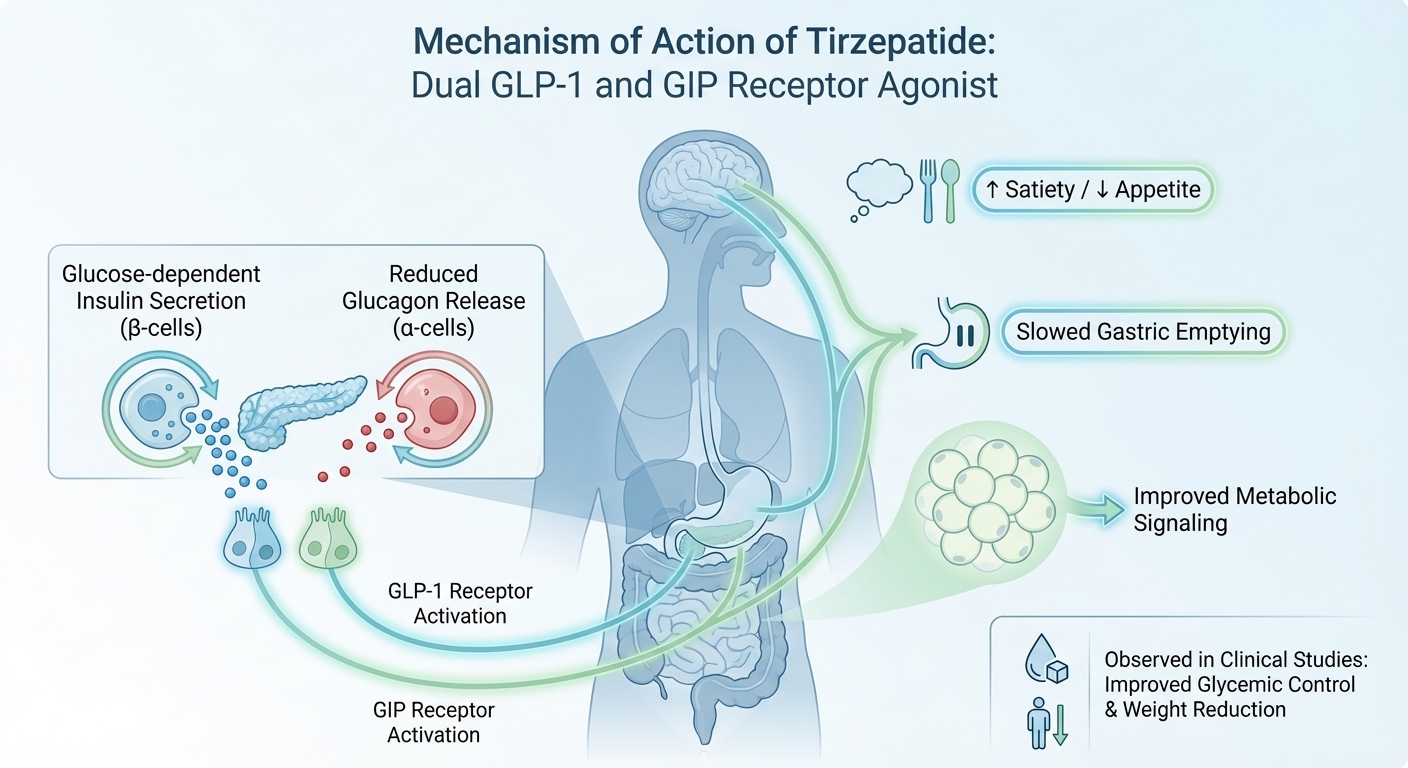
Tirzepatide is a newly developed medication designed to help manage type 2 diabetes and promote weight loss through two targeted actions. It activates both GLP-1 (glucagon-like peptide-1) and GIP (glucose-dependent insulinotropic polypeptide) receptors, which help regulate blood sugar and appetite.
This dual action results in increased insulin release and reduced appetite, improving blood sugar control and weight management. Research demonstrates that Tirzepatide's dual mechanism powerfully improves blood sugar and weight, and most side effects are manageable.
Tirzepatide is a new dual GIP/GLP-1 receptor agonist. Early studies and clinical trials show that tirzepatide can lower blood sugar and support weight loss, with side effects similar to those of other GLP-1 receptor agonists.
— The role of tirzepatide in the management of type 2 diabetes: the SURPASS clinical trials, 2021
This comprehensive guide will walk you through everything you need to know about Tirzepatide—from how it works in your body, to its remarkable benefits for blood sugar control and weight management, to understanding potential side effects and how to manage them effectively.
Tirzepatide is marketed under two brand names, each approved for different primary uses but sharing the same powerful dual-action mechanism.
FDA approved in May 2022 for type 2 diabetes management. Helps control blood sugar through the dual GIP/GLP-1 mechanism.
FDA approved in November 2023 for chronic weight management in adults with obesity or overweight with at least one weight-related condition.
Both brands contain the same active ingredient and act through two hormone pathways to regulate blood sugar and facilitate weight reduction.
Tirzepatide activates both GLP-1 (glucagon-like peptide-1) and GIP (glucose-dependent insulinotropic polypeptide) receptors, which help the body control blood sugar, increase insulin during meals, lower glucagon (a hormone that raises blood sugar), and reduce appetite.
Stimulates insulin release, slows gastric emptying, and reduces appetite—similar to semaglutide.
Enhances insulin secretion and may improve fat metabolism, providing additional metabolic benefits.
Reduces hunger signals in the brain, naturally decreasing food intake and cravings.
Improves cholesterol, lipid profiles, and overall cardiometabolic health markers.
Tirzepatide—a dual GIP and GLP-1 receptor agonist—is more than another diabetes drug. Administered as a weekly subcutaneous injection, it lowers blood sugar, enhances insulin response, aids weight loss, and improves cholesterol and lipid profiles.
— The dual GIP and GLP-1 receptor agonist tirzepatide: a novel cardiometabolic therapeutic, Fisman, 2021
Tirzepatide effectively manages type 2 diabetes and supports weight loss. It lowers HbA1c levels, supports diabetes management, and reduces the risk of complications.
SURPASS program results indicate that Tirzepatide can reduce HbA1c and body weight, and also improve other cardiovascular and metabolic risk factors.
Tirzepatide is the first type 2 diabetes medicine to activate both GLP-1 and GIP receptors. Over up to two years, weekly doses of 5 to 15 mg lowered HbA1c by 1.87% to 3.02%, reduced body weight by 5.4 to 12.9 kg, and improved liver fat, kidney function, blood pressure, and cholesterol in people with type 2 diabetes.
— Efficacy and safety of tirzepatide in type 2 diabetes and obesity management, Papamargaritis, 2023
Tirzepatide supports significant weight loss in people with and without diabetes. In the SURMOUNT-1 trial, people without diabetes lost about 15% of their body weight in 72 weeks.
Average body weight loss
Treatment duration
Maximum weight loss at highest dose
Tirzepatide reduces appetite (the desire to eat) and boosts metabolism, helping the body use more energy for effective weight loss. The dual mechanism targeting both GIP and GLP-1 receptors appears to provide enhanced weight loss compared to GLP-1-only medications.
Many people feel satisfied with smaller portions and experience fewer cravings, making it easier to maintain a healthy eating pattern while on treatment.
Tirzepatide's approval was backed by one of the most extensive clinical trial programs in the history of metabolic medicine. The **SURPASS** program (focused on Type 2 Diabetes) and the **SURMOUNT** program (focused on Weight Management) involved over 20,000 participants globally.
New England Journal of Medicine, 2022
This phase 3, double-blind, randomized controlled trial evaluated 2,539 adults with a BMI of 30 or greater (or 27 with complications). Participants received 5mg, 10mg, or 15mg of tirzepatide once weekly.
In this 40-week head-to-head trial, tirzepatide (at all doses) was found to be superior to semaglutide 1mg in both HbA1c reduction and weight loss.
These trials proved that continued use is critical. Participants who switched to placebo after 36 weeks regained significant weight, while those who continued tirzepatide continued to lose or maintain.
Metabolic diseases like obesity and Type 2 Diabetes require long-term management strategies, not short-term "fixes."
The secret lies in the **dual-receptor synergy**. While GLP-1 (Glucagon-like Peptide-1) is highly effective at signaling satiety to the brain and slowing digestion, GIP (Glucose-dependent Insulinotropic Polypeptide) appears to play a critical role in how the body stores and utilizes fat.
Research suggests that GIP may improve the "metabolic flexibility" of adipose tissue (fat cells), potentially making them more responsive to weight loss efforts and reducing the systemic inflammation associated with obesity. By activating both pathways, tirzepatide creates a metabolic environment that is more conducive to weight loss than activating GLP-1 alone.
One of the most frequent questions patients ask is: "Do I have to take tirzepatide forever?" The answer depends on your biology, your health history, and the goals you set with your physician. However, clinical data strongly suggests that obesity is a chronic condition that often requires long-term management.
Once goal weight is achieved, many doctors transition patients to a "maintenance dose." This often involves staying on a lower dose or increasing the time between injections (e.g., every 10-14 days instead of every 7).
In the SURMOUNT-4 trial, participants who switched to a placebo after 36 weeks of tirzepatide regained an average of **14%** of their body weight within a year.
"This confirms that tirzepatide treats the underlying biology of obesity. When the treatment stops, the biology that drives weight gain often returns."
Sudden cessation can lead to intense hunger (rebound appetite). Most specialists recommend a very slow taper over 3-6 months if a patient chooses to stop, while closely monitoring weight and glucose.
Tirzepatide is a tool that "lowers the floor," but lifestyle habits build the "foundation." High-protein diets and resistance training are critical to prevent muscle loss during active weight loss and maintenance.
Leading obesity medicine specialists now view medications like tirzepatide as "chronic care" treatments, similar to how one might take blood pressure or cholesterol medication. The goal is to manage the disease long-term, not just reach a number on a scale.
While clinical trials provide the data, patient communities provide the context. Thousands of individuals share their journeys daily across patient communities. Here is what real-world users are reporting about their tirzepatide experience.
"The 'food noise' just stopped. For the first time in 30 years, I wasn't thinking about my next meal while eating my current one."
"My energy levels are actually higher. I was worried about fatigue, but the weight coming off has made me more active than ever."
"The first 48 hours after the shot are the hardest for nausea, but it gets better every week. Electrolytes are a game changer."
Perhaps the most profound report from the community is the elimination of "food noise"—the constant, intrusive thoughts about food. Users describe a new mental clarity and a feeling of "normality" around eating that they hadn't experienced before.
Prioritize protein and hydration on injection day to minimize potential nausea.
Use a tracking app not just for weight, but for injection sites to ensure rotation.
Want to see more data? We've analysed patient-reported trends across the community.
Like other medicines, Tirzepatide may produce side effects ranging from mild to severe. Patients should be informed about these potential effects prior to beginning treatment.
Common stomach-related side effects include nausea, vomiting, diarrhoea, loss of appetite, and constipation. These usually go away as your body gets used to the medicine.
Drink plenty of water, especially if experiencing nausea or diarrhea, to prevent dehydration.
Consuming smaller, more frequent meals may alleviate gastrointestinal discomfort.
To help minimise side effects, begin with a low dose and gradually increase so the body can adjust. The recommended starting dose is 2.5 mg, increasing every 4 weeks as tolerated.
Most side effects are mild, but severe issues—like pancreatitis or allergic reactions—can occur. Seek medical help immediately for:
Taking Tirzepatide the right way is important for safety and good results. Knowing the correct dose and how to inject it helps you get the best outcome.
The usual starting dose of Tirzepatide is 2.5 mg once a week. Increase the dose every 4 weeks to 5 mg, 7.5 mg, 10 mg, 12.5 mg, and up to 15 mg weekly, depending on how you respond and tolerate it. This plan helps control blood sugar and reduce side effects.
| Week | Dose | Notes |
|---|---|---|
| Weeks 1-4 | 2.5 mg | Starting dose |
| Weeks 5-8 | 5 mg | First escalation |
| Weeks 9-12 | 7.5 mg | Optional |
| Weeks 13-16 | 10 mg | Optional |
| Weeks 17-20 | 12.5 mg | Optional |
| Week 21+ | 15 mg | Maximum dose |
Tirzepatide is injected under the skin in the abdomen, thigh, or upper arm. Rotate sites to prevent irritation. Store in the fridge and protect from light. It can be at room temperature for up to 21 days if needed.
Tirzepatide and Semaglutide are both used for type 2 diabetes and weight management, but they work in different ways and have different levels of effectiveness.
Semaglutide is a GLP-1 receptor agonist, while Tirzepatide is a dual GLP-1/GIP receptor agonist. This means that Tirzepatide activates both the GLP-1 and GIP hormone pathways, while Semaglutide activates only the GLP-1 pathway.
| Feature | Tirzepatide | Semaglutide |
|---|---|---|
| Mechanism | Dual GIP/GLP-1 agonist | GLP-1 agonist only |
| HbA1c Reduction | Up to 2.3% | Up to 1.8% |
| Weight Loss | Up to 22% | Up to 15% |
| Administration | Weekly injection | Weekly injection or daily oral |
| Brand Names | Mounjaro, Zepbound | Ozempic, Wegovy, Rybelsus |
Both medicines act on GLP-1 receptors, but Tirzepatide also activates GIP receptors, giving it a two-way effect. This may help it control blood sugar and support weight loss better than Semaglutide. Studies show that Tirzepatide can lower HbA1c more and lead to greater weight loss, making it a strong option for patients.
The cost-effectiveness of these medicines depends on your insurance and personal needs. Both work well, but Tirzepatide may be better for people who need more help with diabetes and weight control. Your doctor should look at your situation to choose the best medicine for you.
Access to Tirzepatide depends significantly on your insurance coverage and out-of-pocket costs. Understanding these factors before starting treatment can help you plan accordingly and explore options to make the medication more affordable.
Without insurance, Mounjaro and Zepbound typically cost between $900 and $1,200 per month, depending on the dose and pharmacy. This is a significant investment, which is why exploring insurance coverage and assistance programs is important.
Many insurance plans cover Mounjaro for type 2 diabetes. Coverage for Zepbound (weight management) varies more widely. Check with your insurance provider for specific coverage details.
Eli Lilly offers savings cards that may reduce out-of-pocket costs for eligible patients. Some patients pay as little as $25 per month with manufacturer coupons.
During FDA-recognized shortages, compounding pharmacies can produce tirzepatide at significantly lower costs. Many telehealth providers offer compounded tirzepatide starting at $299-500/month—often a more affordable option for patients without insurance coverage.
Tirzepatide represents an important advancement in the treatment of type 2 diabetes and obesity. Its dual mechanism offers enhanced benefits for many patients. Always consult with your healthcare provider to determine if Tirzepatide is right for your individual situation.
Which delivers more weight loss — and at what price.
Same molecule, different approvals — cost and coverage differences.
Real-world side-effect reports and mitigation strategies.
Ranked providers with verified pricing.
Safety profile, contraindications, and what the trials show.
Live tirzepatide prices across ~100 providers, verified daily.
The weekly median market price of compounded tirzepatide — original data.