Starting Semaglutide: Your Real First Month Guide
What actually happens in your first 30 days on semaglutide? Here's the honest breakdown of titration, side effects, and when you'll see results.
The First Shot: What You're Actually Getting Into
Starting semaglutide feels like stepping into unknown territory. You've probably spent weeks researching, comparing costs, and wondering if this is really worth it. Now you're holding that pen, and suddenly it's real.
Here's what nobody tells you upfront: your first month isn't about dramatic weight loss. It's about your body learning to work with this medication while you figure out your new normal.
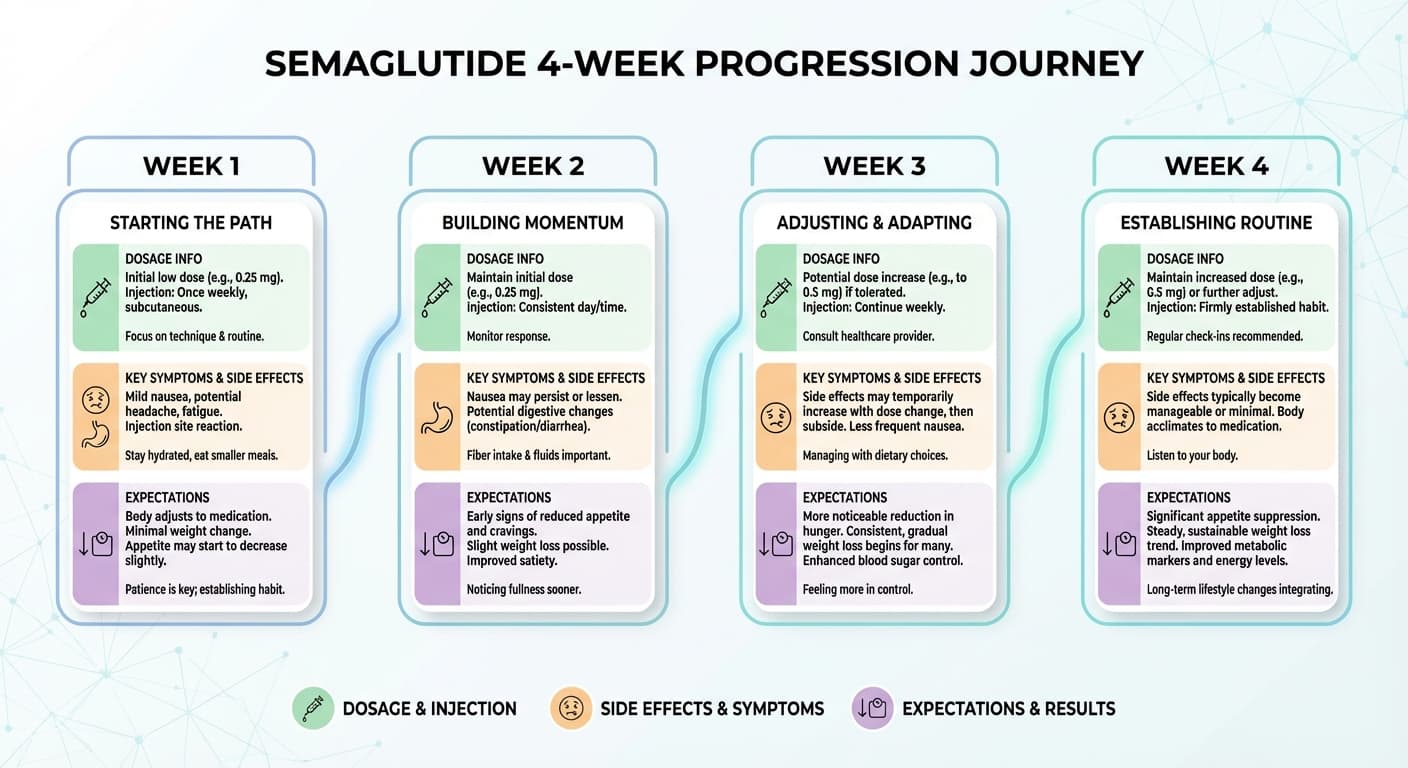
Most people start with 0.25mg once weekly. That's not a weight loss dose – it's a "let's see how your stomach handles this" dose. Think of it as a trial run before the real work begins.
Week 1-2: The Adjustment Phase
Your first injection might feel anticlimactic. Some people notice appetite changes within hours, others feel nothing for days. Both reactions are completely normal.
The most common early side effects show up around day 2-4:
Nausea hits about 60% of people starting out. It's usually mild – more like car sickness than food poisoning. Eating smaller meals helps, and it typically fades as your body adjusts.
Digestive changes are practically guaranteed. Your stomach empties slower, which means food sits longer. You might feel full after three bites of dinner when you used to clear your plate.
Fatigue sneaks up on many people. When you're eating 500-800 fewer calories without trying, your energy dips until your metabolism catches up.
Real talk: don't expect weight loss yet. Some people drop 2-3 pounds in week one, but that's usually water weight. Others see the scale go up from constipation or eating differently. Both are temporary.
Week 3-4: Finding Your Rhythm
By week three, the initial side effects usually calm down. Your body's getting used to the medication, and you're learning what foods work best.
This is when appetite suppression really kicks in. Food thoughts that used to dominate your day start fading into background noise. You might forget to eat lunch – something that seemed impossible a month ago.
Weight loss typically becomes noticeable here. Most people see 2-5 pounds down by the end of month one, though some lose more and others less. The scale matters less than how your clothes fit and how you feel around food.
What About Titrating Up?
After four weeks at 0.25mg, most doctors bump you to 0.5mg. This is where things get interesting – and potentially rougher.
The jump to 0.5mg often brings back side effects you thought you'd conquered. Nausea might return for a few days. Your appetite could disappear almost entirely. Plan for this by having easy-to-digest foods ready: crackers, soup, smoothies.
Some people stay at 0.25mg for 6-8 weeks if they're seeing good results with minimal side effects. Others push to 0.5mg quickly because they want faster progress. There's no universal right answer – it depends on your tolerance and goals.
Managing the Hard Parts
When nausea hits: Eat smaller portions, avoid greasy foods, and try ginger tea. Taking your injection before bed can help you sleep through the worst of it.
For constipation: Increase water and fiber gradually. Sudden fiber increases can backfire and make you feel worse.
Energy crashes: Don't fight your body's need for rest during the first few weeks. Your metabolism is recalibrating.
Food aversions: Many people develop sudden dislikes for foods they used to love. Roll with it rather than forcing yourself to eat things that make you queasy.
When Results Actually Show Up
Honest answer: meaningful weight loss usually takes 6-8 weeks. Your first month is mostly about side effect management and dosing adjustments.
What you will notice in month one:
- Less food noise in your head
- Feeling satisfied with smaller portions
- Fewer cravings for junk food
- Better blood sugar stability if you're diabetic
The people posting dramatic before-and-after photos from their first month are outliers. Most of us need time for the medication to build up and our bodies to respond.
Setting Realistic Expectations
Weight loss on semaglutide averages 1-2 pounds per week once you're on an effective dose. That means 4-8 pounds in your first month if everything goes perfectly – but perfection is rare.
Some weeks you'll lose nothing. Other weeks you might drop 3-4 pounds seemingly overnight. Your body doesn't read the clinical trial data about steady, consistent loss.
Non-scale victories matter more early on. Notice how you feel around food, your energy levels, and whether you're thinking about eating less throughout the day.
Red Flags to Watch For
Most side effects are manageable, but call your doctor if you experience:
- Severe abdominal pain that doesn't improve
- Persistent vomiting that prevents you from keeping fluids down
- Signs of pancreatitis (severe stomach pain radiating to your back)
- Extreme fatigue that interferes with daily activities
The good news? Serious side effects are rare, especially at starting doses.
Looking Ahead
Your first month on semaglutide is about building a foundation, not achieving your final results. Focus on learning how your body responds, establishing new eating patterns, and managing side effects.
Many people find Wegovy (the weight loss formulation) more effective than off-label Ozempic, though both contain the same active ingredient. Insurance coverage and cost often drive the decision more than medical factors.
By month two, you'll have a much better sense of whether semaglutide is working for you. The initial uncertainty and side effects fade, leaving you with a tool that can genuinely change how you relate to food – just not overnight.
The first month isn't easy, but it's temporary. Most people who stick it out find the adjustment period worth it once they see how dramatically their appetite and cravings change.