Semaglutide Week 1-4: Your First Month Reality Guide
Here's what actually happens during your first four weeks on semaglutide, from that initial tiny dose to when you'll start seeing real changes.
Starting semaglutide feels like stepping into unknown territory. You've got your prescription, you've watched the injection videos, and now you're wondering what the next 30 days will actually look like.
Having talked to dozens of people who've been through this exact experience, here's your realistic roadmap for what to expect during your first month on semaglutide.
Week 1: The Gentle Introduction (0.25mg)
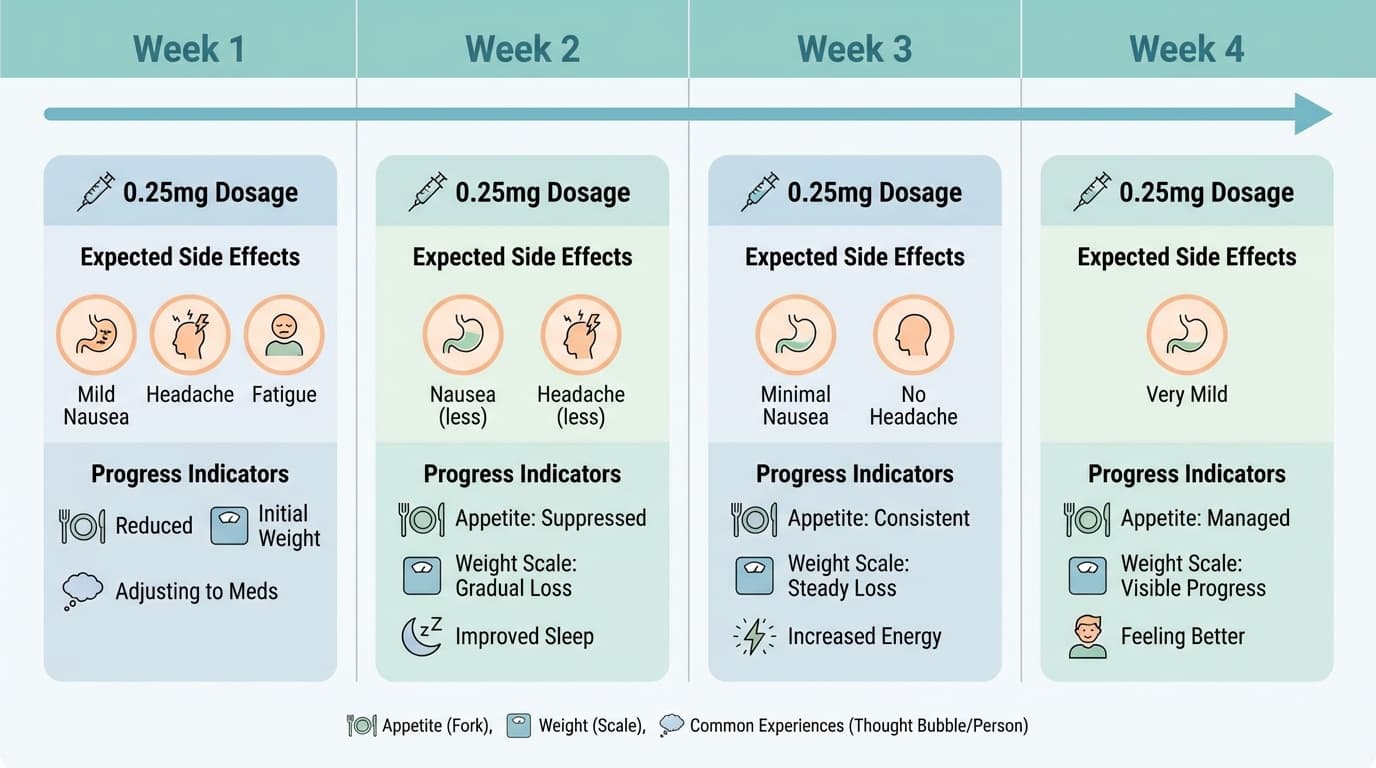
Your first week starts with 0.25mg – and there's a good reason this dose is so small. Most people feel... not much of anything, honestly.
Some lucky folks notice their appetite dial down a notch right away. You might find yourself forgetting about your usual 3pm snack or feeling satisfied with smaller portions. Don't expect dramatic changes yet – your body is just getting acquainted with how semaglutide works.
The side effects during week one are typically mild. About 30% of people experience some nausea, but it's usually manageable. Think car-sick light rather than stomach-flu intense. Some people get a bit of fatigue or mild stomach upset.
Real talk: If you're expecting to lose 5 pounds this week, pump the brakes. Most people lose 1-2 pounds, and some don't lose anything yet. That's completely normal.
Week 2: Still Getting Started
You're still on that same 0.25mg dose, but your body has had more time to adjust. This is often when the appetite suppression becomes more noticeable.
Many people describe it as their "food noise" getting quieter. You know that constant mental chatter about what to eat next? It starts to fade. You might actually forget to eat lunch – something that seemed impossible before.
Nausea can peak during the second week as your body adapts. The good news is it usually improves if you:
- Eat smaller, more frequent meals
- Avoid greasy or super rich foods
- Don't drink liquids with meals
- Take your time eating
Weight loss is still modest – maybe 2-4 pounds total if you're seeing changes. Some people won't see the scale move much yet, and that's okay too.
Week 3: Building Momentum
Still on 0.25mg, but things start getting more interesting. Your appetite suppression should feel more consistent now. Foods that used to call your name from the kitchen might not seem as appealing.
This is when many people notice they're naturally making different food choices. That giant burrito that sounded amazing before might seem like too much. You're probably eating 20-30% less without really trying.
Some people experience what I call the "bite barrier" – you take a few bites of something and suddenly feel done. Listen to that signal. Pushing through it often leads to uncomfortable fullness or nausea.
By week three, total weight loss might be 3-6 pounds. Remember, losing 1-2 pounds per week is actually ideal for sustainable weight loss.
Week 4: Time to Step Up
End of week four means it's time for your first dose increase to 0.5mg. This is where things often shift into higher gear.
After nearly a month on the starter dose, you've probably lost somewhere between 4-8 pounds total. More importantly, you've likely developed new eating patterns that feel natural rather than forced.
The dose increase might bring back some side effects you experienced in week one, but they're usually milder since your body has adapted to the medication. About 40% of people experience increased nausea for a few days after bumping up.
What About Results?
Here's what most people want to know: when will you see "real" results?
Appetite changes: Week 1-2 for most people
Weight loss: Usually starts week 2-3
Clothing fitting differently: Week 3-4
Others noticing: Usually around week 6-8
If you're taking Wegovy specifically for weight loss, remember that clinical trials showed an average of 5-10% body weight loss over 16-20 weeks. That first month is just laying the foundation.
Side Effects: The Real Story
Nausea is the big one – about 70% of people experience it to some degree. It usually peaks during dose increases and gets better as your body adapts.
Other common first-month side effects:
- Fatigue (especially week 1-2)
- Constipation or diarrhea
- Mild headaches
- Feeling full quickly
- Sometimes acid reflux
What most people don't realize: side effects often come in waves. You might feel great for three days, then have two rough days. That's normal.
Managing Your First Month
Start a simple log of how you feel each day. Note your energy levels, appetite, any side effects, and weight changes. This helps you and your doctor figure out what's working.
Meal timing becomes important. Eating late or having large meals can make nausea worse. Many people find success with:
- Smaller breakfast
- Light lunch
- Early, modest dinner
- Avoiding late-night eating
Hydration matters more than you think. The medication can sometimes cause mild dehydration, especially if you're eating less. Aim for consistent water intake throughout the day.
When to Call Your Doctor
Most first-month experiences are normal, but reach out if you have:
- Severe nausea that prevents you from eating for more than 24 hours
- Persistent vomiting
- Severe abdominal pain
- Signs of dehydration
- Any concerning symptoms that worry you
The honest answer: your first month on semaglutide is about adjustment, not transformation. You're building habits, managing side effects, and letting your body adapt to a new way of eating.
By day 30, you should have a good sense of how the medication affects you and feel ready for the next phase of treatment. The real magic often happens in months 2-4, once you've worked up to your effective dose.