Semaglutide Beginners: Your Complete First Month Guide
Starting semaglutide can feel overwhelming, but knowing what to expect each week helps you prepare for the ups and downs ahead.
Starting semaglutide feels like stepping into unknown territory. You've heard the success stories, maybe seen the before-and-after photos, but what actually happens when you take that first injection?
Having talked to hundreds of people who've been exactly where you are now, I can tell you that the first month is all about your body learning to work with this medication. Some weeks will feel great, others might test your patience. Here's what you need to know.
Understanding Semaglutide Dosing (It's Slower Than You Think)
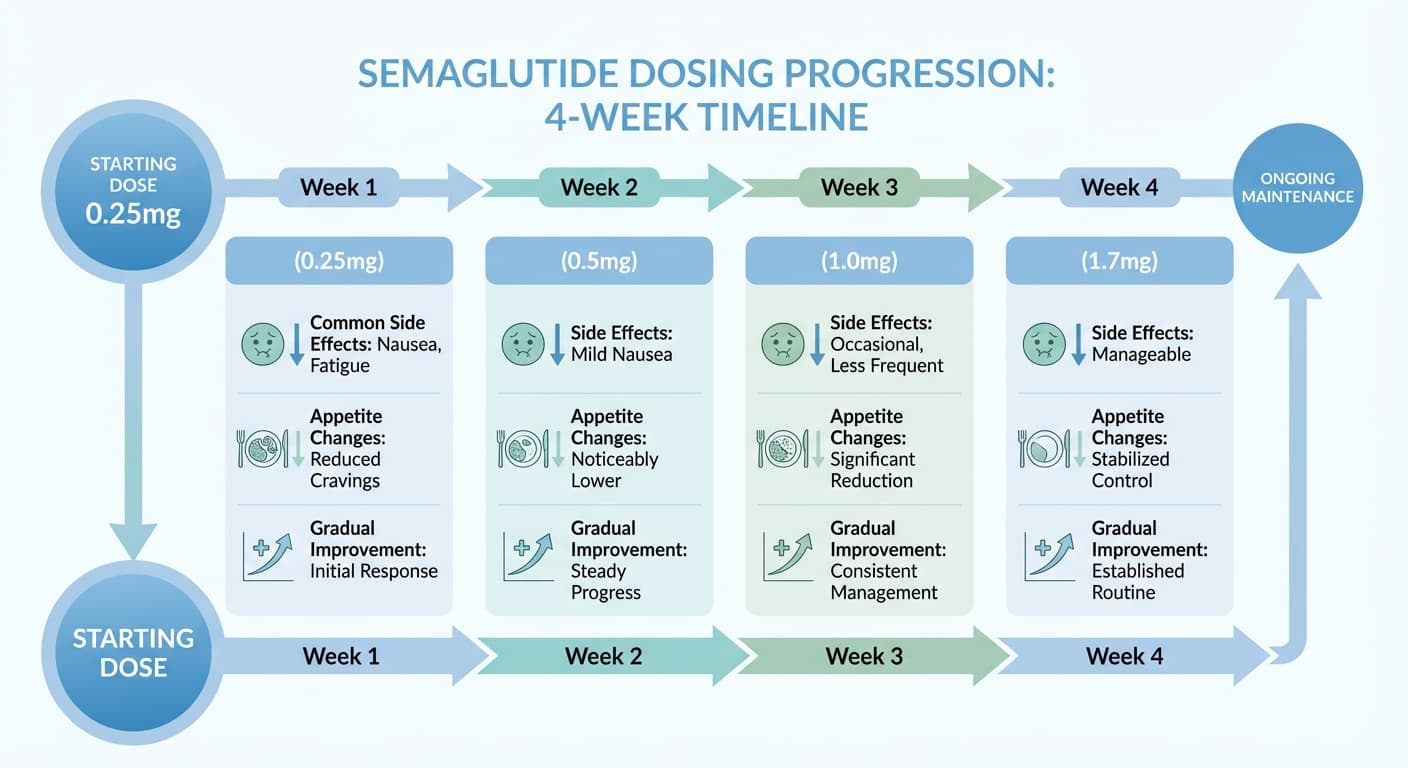
Most people start at 0.25mg once weekly. This isn't a therapeutic dose – it's your body's training wheels. The goal is letting your system adjust without overwhelming side effects.
After four weeks, you'll typically move to 0.5mg. Some doctors prefer an even gentler approach, especially if you're sensitive to medications or have a history of digestive issues. Don't worry if your friend started at a higher dose – everyone's different.
The maintenance doses range from 1mg to 2.4mg weekly, but you won't get there for months. Semaglutide works best when your body has time to adapt gradually.
Week 1: The Honeymoon Phase
That first injection might feel anticlimactic. Many people expect immediate appetite suppression or dramatic changes, but week one is usually pretty mild.
What you might notice:
- Slightly less interest in food between meals
- Feeling full faster than usual
- Maybe some mild nausea, especially after eating
- Food thoughts aren't as loud or persistent
Real talk: Some people feel nothing the first week. That's completely normal at 0.25mg. Your body is just getting introduced to how semaglutide works.
The biggest mistake people make is changing their eating habits too dramatically right away. Stick with normal portions and regular meals. This isn't the time to suddenly cut calories in half.
Week 2: Side Effects Start Showing Up
This is when most people get their first real taste of semaglutide side effects. Your digestive system is figuring out how to work with the medication.
Common experiences include:
- Nausea that's worse in the morning or after meals
- Feeling uncomfortably full after normal portions
- Some bathroom changes (usually constipation)
- Food aversions starting to develop
- Fatigue as your eating patterns shift
Here's what helps: Eat smaller meals more frequently. If you normally eat three big meals, try five smaller ones. Bland foods become your friend – think crackers, rice, bananas.
Many people panic about the nausea, but it usually peaks around week 2 or 3, then gets better as your body adjusts.
Week 3: The Reality Check
Week three often brings the strongest side effects. This is when people either push through or decide semaglutide isn't for them.
You might experience:
- More intense nausea, especially with certain foods
- Strong food aversions (suddenly hating foods you used to love)
- Significant appetite reduction
- Some weight loss starting to show on the scale
- Fatigue from eating less than usual
The honest answer: This week can be rough. Greasy foods, alcohol, and large meals often trigger nausea. Some people can't tolerate meat or dairy temporarily.
What most people don't realize is that staying hydrated becomes crucial. Dehydration makes every side effect worse. Sip water throughout the day, even if you don't feel thirsty.
Week 4: Finding Your Rhythm
By week four, your body starts adapting. The side effects often become more manageable, and you're learning what foods work best.
Typical changes:
- Nausea becomes predictable (you know what triggers it)
- Appetite suppression feels more natural
- Energy levels start stabilizing
- Weight loss becomes noticeable (usually 3-8 pounds total)
- Food choices naturally shift toward lighter options
This is when many people start feeling cautiously optimistic. You're not fighting the medication anymore – you're working with it.
Managing Side Effects Like a Pro
The people who do best on semaglutide learn these strategies early:
For nausea: Ginger tea, small frequent meals, avoid lying down after eating. Some people swear by eating a few crackers before getting out of bed.
For appetite loss: Don't force large meals, but make sure you're getting enough protein and nutrients. Smoothies and soups often go down easier than solid foods.
For fatigue: This usually improves as your body adjusts to eating less. Make sure you're not cutting calories too aggressively.
For constipation: Increase fiber gradually, drink more water, stay active. Sudden fiber increases can backfire and cause bloating.
When to Expect Weight Loss Results
Here's the timeline most people experience:
- Week 1-2: Maybe 1-2 pounds, mostly water weight
- Week 3-4: 3-8 pounds total, mix of water and fat loss
- Month 2-3: More consistent 1-2 pounds per week
- Month 4+: Steady progress as doses increase
Some people lose faster, others slower. Your starting weight, diet changes, and individual response all matter. Wegovy, the higher-dose version of semaglutide, typically shows more dramatic results over time.
Red Flags: When to Call Your Doctor
Most side effects are manageable, but watch for:
- Vomiting that prevents keeping fluids down
- Severe abdominal pain that doesn't improve
- Signs of dehydration (dizziness, dark urine, extreme fatigue)
- Rapid heart rate or chest pain
- Severe depression or mood changes
Don't tough it out if side effects are truly unbearable. Your doctor might slow the titration schedule or adjust your approach.
Setting Realistic Expectations
The first month is about adaptation, not transformation. You're building the foundation for long-term success, not racing to a finish line.
Most people feel significantly better by month two. The side effects become manageable, the appetite suppression feels natural, and weight loss becomes more consistent.
Some weeks will be harder than others. That's part of the process, not a sign that something's wrong. Your body is learning a new way of regulating hunger and fullness – give it time to figure things out.
Remember: The goal isn't just losing weight quickly. It's developing a sustainable relationship with food that lasts long after you reach your target weight.