Your First Month on Tirzepatide: What Really Happens
Starting tirzepatide? Here's your honest week-by-week guide to side effects, dosing, and what actually happens during your first 30 days.
Week 1: The Gentle Start
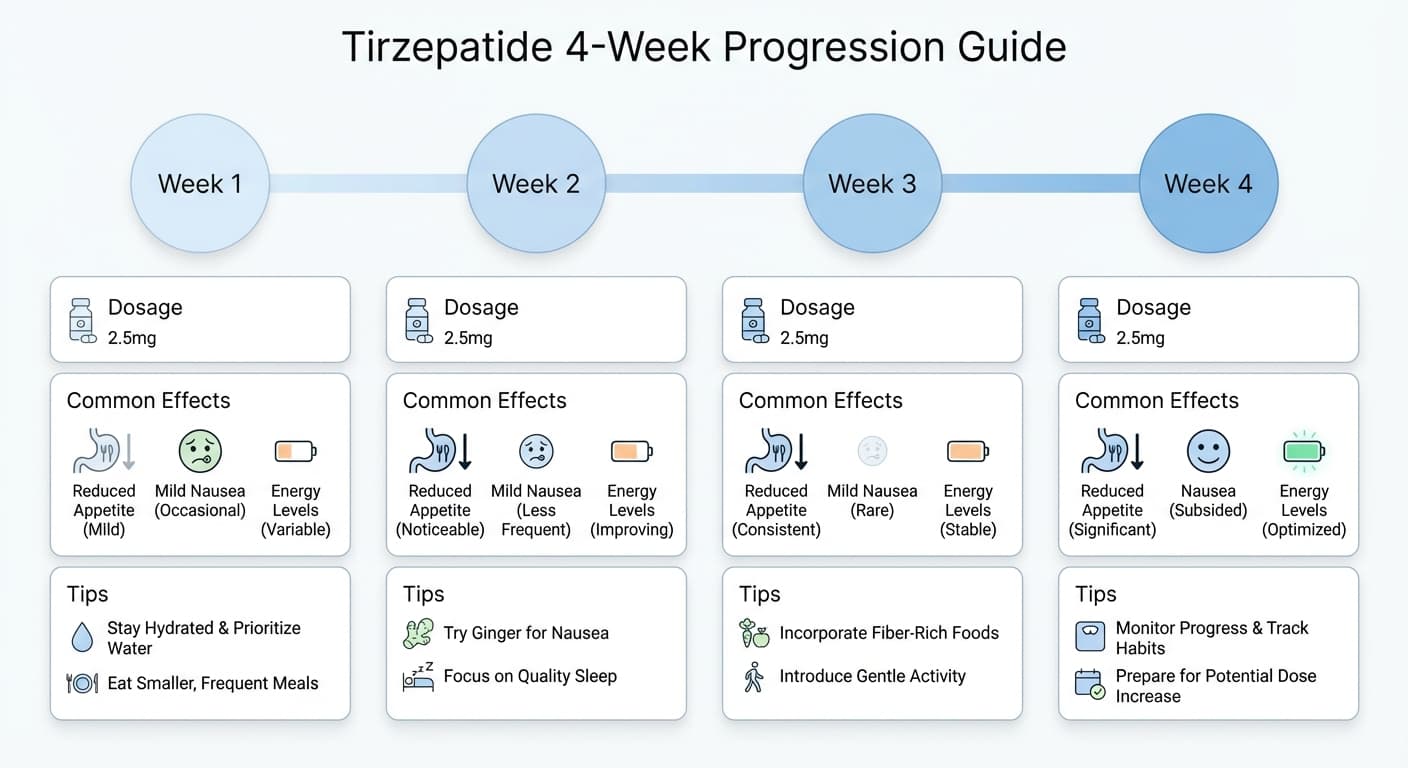
Your doctor will start you on 2.5 mg of tirzepatide once weekly. This isn't your therapeutic dose – it's training wheels for your body. The 2.5 mg dose is specifically designed to minimize side effects while your system adjusts.
Most people feel... pretty normal during week one. That's completely expected. You might notice slightly less hunger between meals, but don't panic if you feel nothing dramatic. Your body is just getting acquainted with how tirzepatide slows gastric emptying and affects your blood sugar.
Real talk: Some people do experience mild nausea or feel full faster than usual. If you're eating the same portion sizes as before, you might feel uncomfortably stuffed. Start paying attention to your body's fullness cues now – they're about to get much stronger.
Week 2-4: Finding Your Rhythm
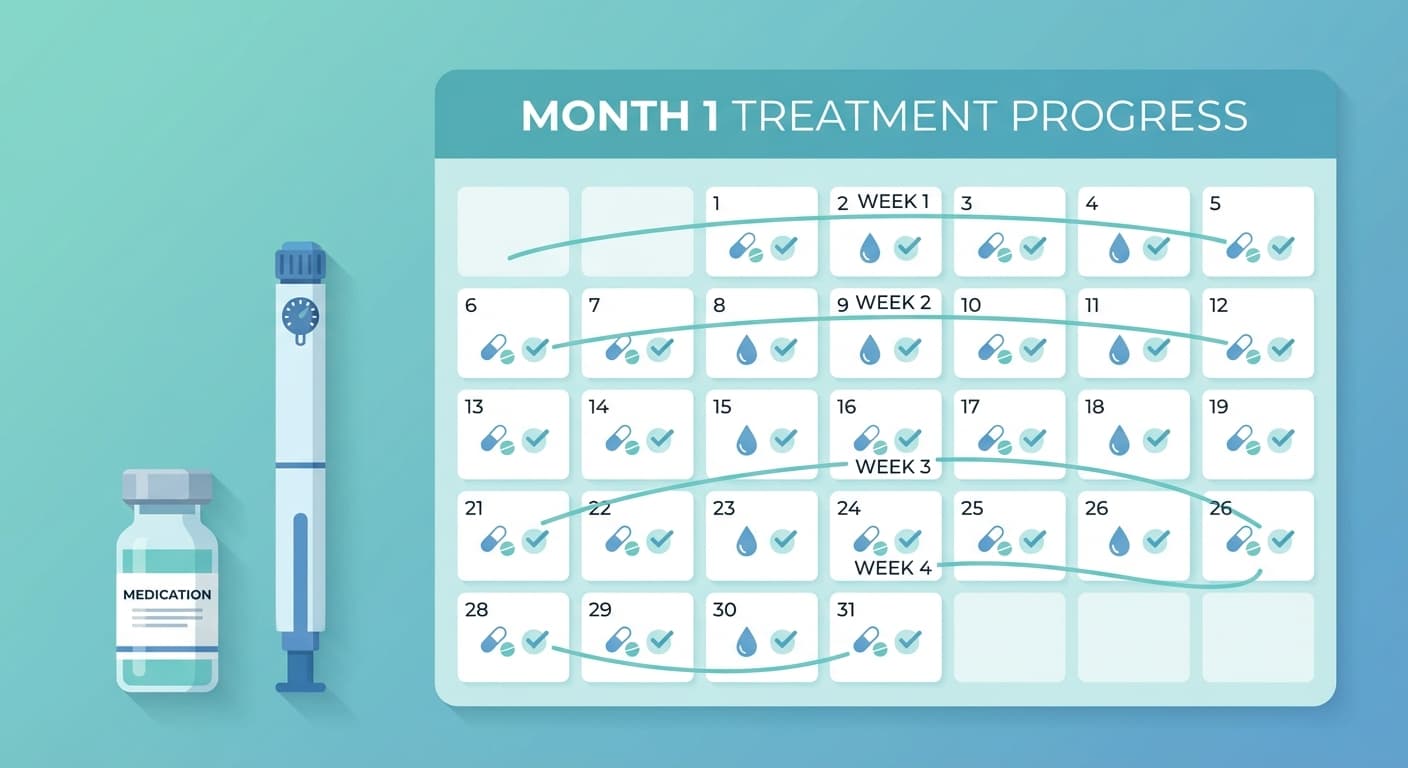
You'll stay on that same 2.5 mg dose for the full month. Here's what typically happens:
Appetite changes usually kick in around day 10-14. You'll probably find yourself naturally eating smaller portions without trying. That's the medication working on your GLP-1 receptors, telling your brain you're satisfied with less food.
Nausea might show up fashionably late. While some people get it right away, others don't experience any stomach issues until week 2 or 3. It often hits 1-2 days after your injection and fades by day 4-5.
Your bathroom habits may change. Constipation affects about 20% of people on tirzepatide. If this happens to you, increase your water intake and add more fiber gradually. Don't go overboard with fiber all at once – that can backfire spectacularly.
The Side Effects Timeline (Let's Be Honest)
Here's the thing: everyone wants to know about side effects, but the timing varies wildly between people. Some patterns are pretty common though.
Days 1-3 after injection: This is when you're most likely to feel nauseous if it's going to happen. The medication peaks in your system around day 1-2.
Week 2-3: Many people hit a rough patch here. Your body is still adjusting, but the medication has built up enough to really impact your digestion. Don't assume this is your new normal.
Week 4: Most side effects start mellowing out. Your body adapts faster than you think.
The most common issues you might face:
- Nausea (about 30% of people)
- Feeling full quickly (almost everyone)
- Fatigue (especially if you're eating much less)
- Mild stomach discomfort
- Changes in bowel movements
What About Weight Loss?
The honest answer: probably not much in month one. Clinical trials show people lose an average of 2-4 pounds in their first month on the starter dose. Some lose more, others lose nothing.
This isn't a reflection of how well the medication will work for you long-term. The 2.5 mg dose is intentionally low. Think of this month as your body's orientation period, not boot camp.
What most people don't realize: the real weight loss typically starts when you move up to 5 mg in month two. That's when Zepbound and Mounjaro start flexing their muscles.
Managing the Rough Days
For nausea: Eat smaller, more frequent meals. Avoid greasy or spicy foods for the first few days after your injection. Ginger tea actually helps some people.
For fatigue: You're probably eating significantly fewer calories than before. Make sure you're still getting adequate nutrition, even if the volume is smaller. Protein becomes extra important.
For constipation: Water, gentle movement, and gradual fiber increases. Prunes aren't glamorous, but they work.
For feeling too full: Stop eating when you feel satisfied, even if food remains on your plate. This is hard if you're used to cleaning your plate, but pushing past fullness on tirzepatide feels awful.
Injection Day Strategy
Most people find their groove by week 3-4. Friday injections are popular because if you do feel off, it's during the weekend. Others prefer Monday injections to reset their week.
Pick the same day each week and stick with it. Your body starts anticipating the medication cycle, and consistency helps minimize side effects.
Rotate injection sites between your thigh, stomach, and upper arm. Don't inject into the same spot week after week – that can cause irritation and affect absorption.
When to Call Your Doctor
Severe nausea that prevents you from keeping food down for more than 24 hours isn't normal. Neither is persistent vomiting or signs of dehydration.
Mild side effects that come and go? Totally normal. Feeling like you have food poisoning every day? Time for a phone call.
Some people need to slow down the escalation schedule, and that's perfectly fine. Better to take longer getting to your therapeutic dose than to quit because month one was miserable.
Setting Realistic Expectations
Your first month is about adjustment, not transformation. You're learning how the medication affects your body, how to time your meals, and what foods work best for you now.
Many people feel disappointed if they don't see dramatic changes immediately. Remember: this is a marathon medication, not a sprint. The people who see the best long-term results often had pretty unremarkable first months.
By day 30, you should have a good sense of how tirzepatide affects your appetite and digestion. You'll probably feel more confident about managing any side effects. Most importantly, you'll be ready for month two when your dose increases and the real changes often begin.
The adjustment period isn't always comfortable, but it doesn't last forever. Your body is pretty amazing at adapting – give it time to figure things out.