Your First Month on Semaglutide: Week-by-Week Reality Check
Starting semaglutide? Here's what actually happens in your first four weeks, from that initial tiny dose to when you might see real changes.
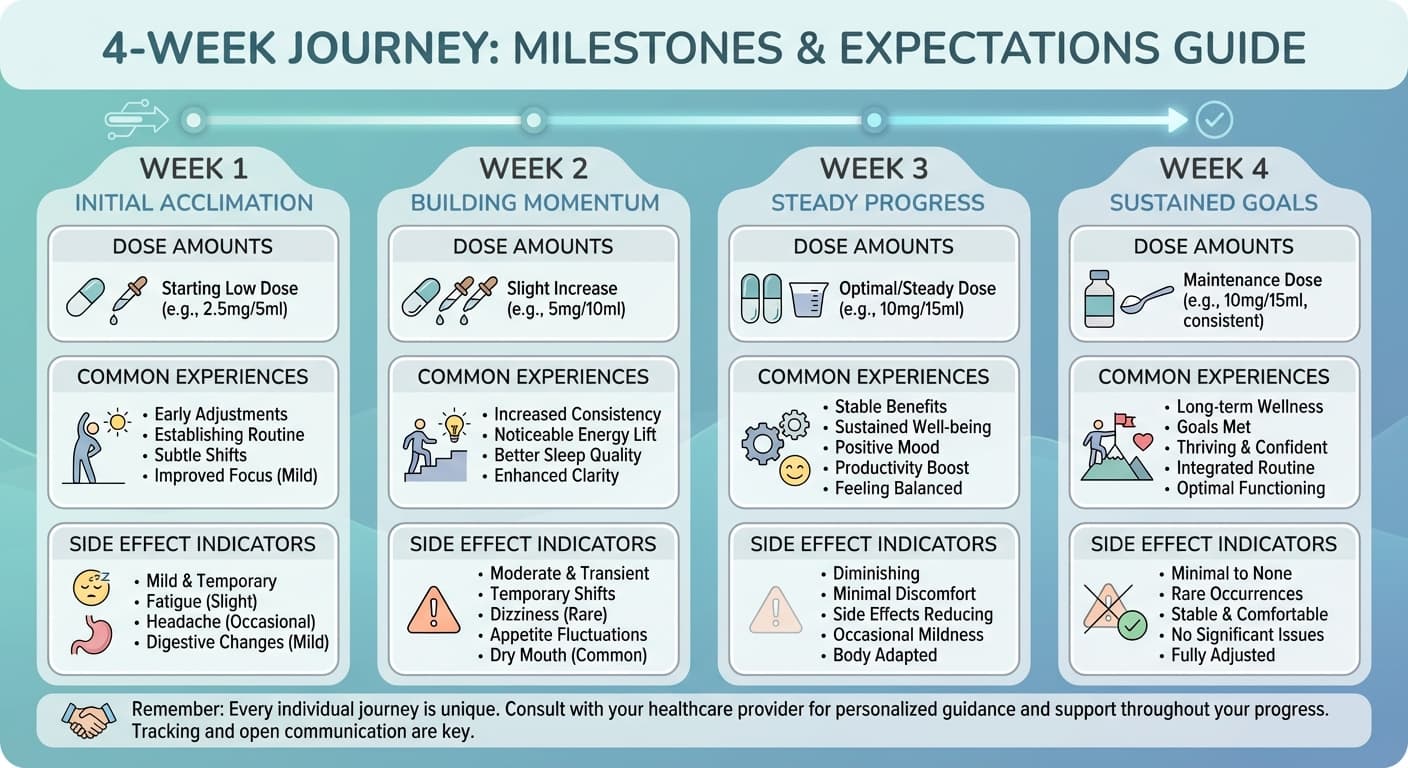
Week 1: The Honeymoon Phase (Sort Of)
Your first semaglutide injection is probably going to be anticlimactic. Most people start with 0.25mg weekly, which is basically a training dose to help your body adjust. Don't expect dramatic changes yet – this isn't about weight loss, it's about getting your system ready.
What you might notice: A slight decrease in appetite, maybe some mild nausea if you eat a big meal. Some people feel nothing at all, and that's completely normal. The injection itself? Way easier than you probably imagined. Those pen needles are tiny.
Real talk: If you're expecting immediate results, pump the brakes. Your body is just meeting semaglutide for the first time.
Week 2-4: Finding Your Rhythm
You'll stay on that 0.25mg dose for the entire first month. Here's the thing: this gradual approach isn't just being cautious – it's preventing you from feeling absolutely miserable.
By week 2, most people start noticing the appetite suppression more clearly. Food thoughts become less frequent. That constant mental chatter about what to eat next? It often gets quieter.
Week 3 and 4 bring more consistency. You might find yourself:
- Forgetting to eat lunch (seriously, set reminders)
- Feeling full after smaller portions
- Not finishing meals you would have demolished before
- Having less interest in snacking
The honest answer about weight loss in month one? Most people see 2-5 pounds come off, but don't panic if your scale barely budges. Water weight, hormones, and your bathroom schedule can all mess with those numbers.
Side Effects: What's Normal vs. What's Not
Nausea is the big one. About 20% of people experience it in the first month, usually mild to moderate. It typically hits 1-3 hours after eating, especially if you eat too much or too fast.
Other common side effects include:
- Constipation (stay hydrated and eat fiber)
- Mild fatigue
- Occasional heartburn
- Feeling full quickly
What most people don't realize: these side effects often improve as your body adjusts. The nausea that bothers you in week 2 might be completely gone by week 4.
Red flags to watch for: severe vomiting, intense stomach pain, or signs of pancreatitis (severe abdominal pain that radiates to your back). These are rare but serious.
The Food Relationship Shift
This is where semaglutide gets interesting beyond just weight loss. Many people describe a fundamental change in how they think about food. That mental obsession with your next meal often fades.
You might find yourself:
- Actually tasting your food instead of inhaling it
- Stopping when you're satisfied (wild concept, right?)
- Not thinking about food between meals
- Having zero interest in foods that used to trigger binges
Some people describe it as finally having a "normal" relationship with food. Others say it's like someone turned down the volume on food noise in their brain.
When Will You See Real Results?
Patience is tough when you're paying $300+ per month, but here's the realistic timeline:
Month 1: Appetite changes, maybe 2-5 poundsMonth 2-3: More noticeable weight loss, 1-2 pounds per weekMonth 4-6: Steady progress, clothes fitting differentlyMonth 6+: Approaching your potential results
Clinical trials show the average person loses about 15% of their starting weight over 68 weeks. But remember – half the people in those studies lost more than that, and half lost less.
Practical Tips for Month One Success
Timing your injection: Pick the same day each week and stick to it. Many people do Sunday evenings or Monday mornings. Set a phone reminder.
Eating strategies: Start with smaller portions than usual. Eat slowly. Stop when you feel satisfied, not stuffed. Your stomach's "full" signals might be stronger and come faster now.
Hydration matters: Drink water throughout the day. Dehydration can make nausea worse and contribute to constipation.
Track something: Whether it's weight, measurements, photos, or just how you feel – having data helps you see progress that might not be obvious day-to-day.
Managing Expectations and Side Effects
Here's what nobody tells you: the first month can feel underwhelming. You're on the lowest dose, your body is adjusting, and dramatic changes are rare.
If nausea hits, try these:
- Eat smaller, more frequent meals
- Avoid fatty or spicy foods
- Don't lie down right after eating
- Ginger tea or ginger chews can help
- Take your injection before bed if daytime nausea is an issue
For constipation (affects about 25% of people):
- Increase water intake
- Add fiber gradually
- Light exercise helps
- Magnesium supplements (check with your doctor first)
Month 2 and Beyond: What Changes
At the end of month one, you'll likely increase to 0.5mg weekly. This is when many people start seeing more significant appetite suppression and weight loss.
Some folks stay at 0.5mg if it's working well. Others continue titrating up to 1mg or even 2mg over the following months. There's no rush – finding your effective dose is more important than reaching the maximum dose quickly.
If you're considering Wegovy specifically, remember it's the same medication as Ozempic, just FDA-approved and dosed specifically for weight management.
The Bottom Line
Your first month on semaglutide is really about adjustment – your body's and your expectations. Most of the magic happens after month one when you increase the dose and your system has adapted.
Don't judge the entire medication based on those first four weeks. Some people feel dramatic changes immediately, others need 2-3 months to see significant results. Both experiences are completely normal.
The people who do best long-term are usually the ones who focus on building sustainable habits during this initial period, rather than obsessing over the scale every day.