Your First 30 Days on Tirzepatide: The Real Timeline
Starting tirzepatide? Here's what actually happens week by week, including the side effects nobody warns you about and when you'll start seeing results.
Week 1: The Gentle Start (2.5mg)
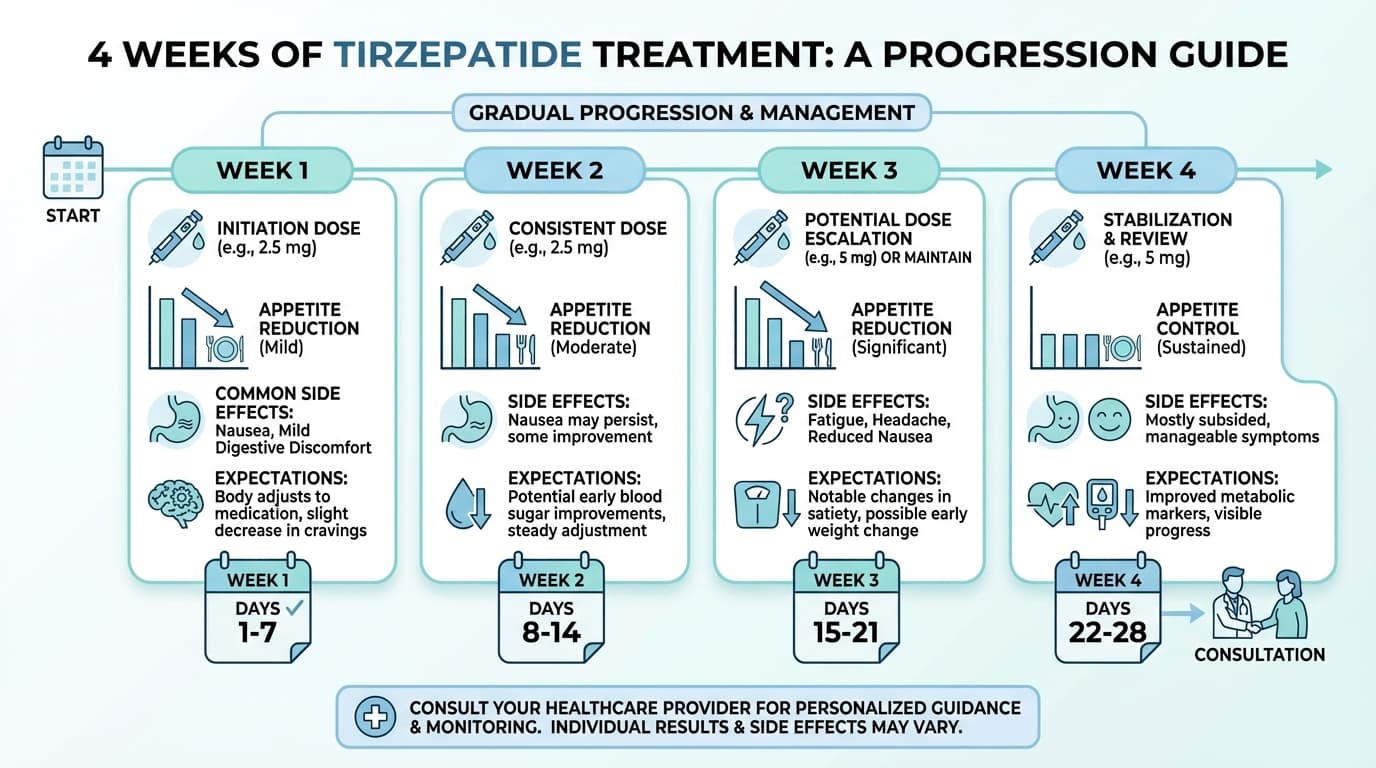
Your first week on tirzepatide is honestly pretty anticlimactic - and that's by design. You'll start with 2.5mg, which is the lowest possible dose. Most people barely feel anything at this point, which can be frustrating if you're expecting immediate appetite suppression.
Here's what's normal: Maybe you feel slightly less hungry between meals, or you get full a bit faster than usual. Some people notice mild nausea, especially if they eat too much or too fast. The key thing? Don't panic if you don't feel much different yet.
Real talk: This week is about your body getting used to the medication, not dramatic changes. If you're one of those people who feels nothing, you're not broken - you're normal.
Week 2-4: Finding Your Rhythm
By week two, most people start noticing the appetite effects more clearly. Food thoughts don't hit as often, and when you do eat, you'll likely get satisfied faster than before. This is where tirzepatide starts showing its personality.
The honest answer about side effects: Nausea is the big one, affecting about 15-20% of people at this starter dose. It usually hits 1-3 hours after your injection and can last several hours. Some folks get mild stomach upset or feel slightly off for a day or two after their weekly shot.
What most people don't realize: The timing of your injection matters. Many find that injecting in the evening works better - if nausea hits, you'll sleep through the worst of it.
Weight loss during this first month? Expect 2-8 pounds, with most people losing 4-6 pounds. Don't get discouraged if it's on the lower end - you're still on the training wheels dose.
The Side Effects Nobody Talks About
Beyond nausea, here are the things that caught people off guard:
Bathroom changes: Your digestion slows down (that's part of how the medication works), so constipation is common. Stock up on fiber and stay hydrated.
Energy shifts: Some people feel more tired the first few weeks. Others actually have more energy because they're not thinking about food constantly.
Sleep changes: A few people report vivid dreams or slightly different sleep patterns. Nothing dramatic, but worth noting.
Food aversions: This one's weird but real - foods you used to love might suddenly seem unappealing. Fried foods, sweets, or heavy meals often lose their appeal first.
What Your Appetite Actually Feels Like
The appetite suppression isn't like flipping a switch. It's more subtle than that. You'll likely notice:
- You forget to eat lunch (this never happened before)
- Restaurant portions look massive
- You can eat three bites of dessert and genuinely not want more
- The voice in your head that used to plan your next meal gets quieter
Some people describe it as finally having a "normal" relationship with food - eating when hungry, stopping when satisfied. Others say it's like the food noise in their brain gets turned way down.
Managing Your First Month
Injection day strategy: Pick the same day each week and stick to it. Many people do Thursday or Friday so if they feel off, it doesn't wreck their weekend.
Food choices matter more now: With a smaller appetite, every bite counts nutritionally. Focus on protein first, then vegetables. You might find you can only eat half your usual portion.
Stay ahead of constipation: This isn't optional. Increase water intake, add fiber gradually, and consider a gentle stool softener if needed.
Track your patterns: Note when side effects hit, what foods work best, and how you're feeling overall. This info will be gold when you move to higher doses.
When to Call Your Doctor
Most side effects are manageable, but here's when to reach out:
- Vomiting that prevents you from keeping fluids down
- Severe abdominal pain
- Signs of pancreatitis (intense stomach pain that radiates to your back)
- Allergic reactions at the injection site
The reality check: About 10-15% of people can't tolerate tirzepatide, even at the lowest dose. If you're miserable and can't function normally, that's worth discussing with your doctor.
Setting Realistic Expectations
Here's the thing: Your first month is just the preview. The real effects come as you gradually increase your dose over the following months. Think of this as your body's introduction to the medication.
Don't expect to lose 20 pounds in month one. Don't expect to never feel hungry again. What you can expect is a gentler start to appetite changes, some digestive adjustments, and hopefully a glimpse of what's to come.
Many people worry they're not responding if they don't feel dramatic effects right away. Zepbound (the weight loss version of tirzepatide) is designed to work gradually - that's actually safer and more sustainable than a dramatic immediate response.
Looking Ahead
Month two is when you'll likely increase to 5mg, and that's typically when people notice more significant appetite suppression and weight loss. Use this first month to establish good habits, figure out your side effect patterns, and get comfortable with the injection routine.
The honest truth? Some weeks will feel more effective than others. Your appetite might fluctuate, especially around your period if you menstruate, during stressful times, or if you're not sleeping well. This is normal medication behavior, not a sign that it's not working.
Your first month on tirzepatide is really about laying groundwork. The dramatic changes most people hope for typically come later, at higher doses, once your body has fully adjusted to this new way of regulating appetite and blood sugar.