New Federal Deal Caps GLP-1 Prices at $245 a Month
The Trump administration just announced a deal that could dramatically cut what you pay for weight-loss medications—but one major state is heading in the opposite direction.
Finally, Some Real Numbers on GLP-1 Pricing
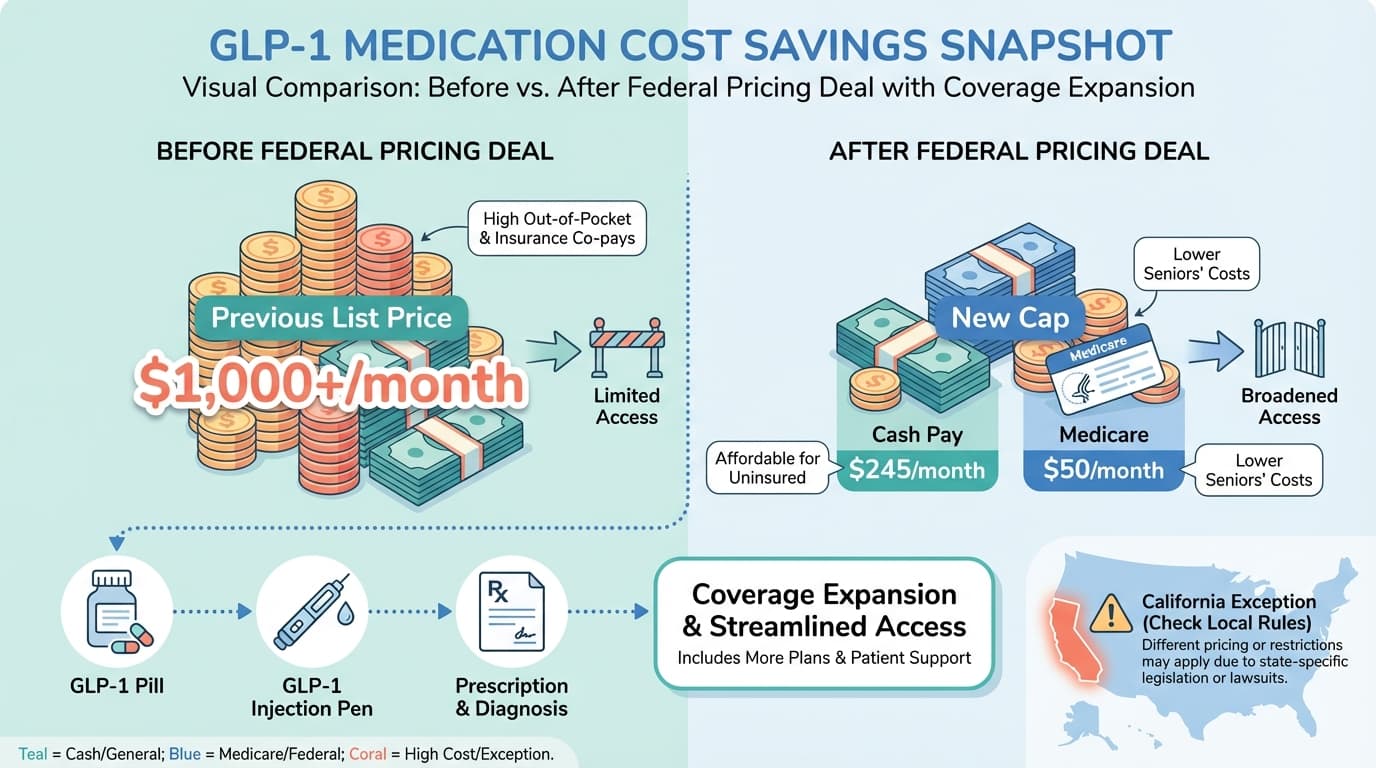
Let's cut straight to what you actually care about: the Trump administration struck a deal with Eli Lilly and Novo Nordisk that caps injectable GLP-1 medications at roughly $245 per month for cash-pay patients. If you're on Medicare, your copay would be just $50. Medicaid beneficiaries? Even less.
Here's the thing: this applies to both weight-loss and diabetes versions of these drugs. So whether you're looking at semaglutide (that's Wegovy and Ozempic) or tirzepatide (Mounjaro and Zepbound), the same pricing structure would apply.
The deal also sets future pricing for oral versions—$149 per month for the lowest doses—assuming they get FDA approval. More on that in a minute.
In exchange, the drug makers get some sweeteners: priority FDA review vouchers and tariff relief if they commit to manufacturing in the U.S. It's a give-and-take, but the bottom line is lower prices for patients.
Medicare and Medicaid Coverage Is Expanding Too
Along with the pricing deal, there's a new voluntary program called BALANCE that aims to get GLP-1 weight-loss drugs covered for more Medicare and Medicaid patients. Right now, Medicare Part D technically can't cover drugs just for weight loss—this model creates a workaround.
State Medicaid agencies, Medicare Part D plans, and the manufacturers themselves can all opt into this program. It's voluntary, so coverage will vary depending on where you live and which plan you have. But it signals a real shift in how the federal government thinks about covering these medications.
Will your specific plan participate? That's still TBD. Keep an eye on announcements from your insurer over the coming months.
Oral GLP-1s Could Be Here Sooner Than Expected
Hate needles? There's movement on that front too. The FDA just granted accelerated review to two oral GLP-1 medications: Novo Nordisk's oral semaglutide and Eli Lilly's orforglipron. Both are being developed for obesity treatment.
Accelerated review means decisions could come within about two months instead of the usual timeline. If approved, these pills would give you alternatives to the injectable versions that dominate the market right now.
A word of caution though: accelerated review doesn't guarantee approval. We've seen promising drugs stumble at the finish line before. But the fact that both major manufacturers have oral options in the pipeline is genuinely good news for people who want more choices.
California Is Going the Other Direction
Now for the frustrating news. While the federal government is pushing to expand access, California's Medi-Cal program just announced it's dropping coverage for Wegovy and Zepbound for weight loss starting January 1, 2026.
Ozempic and Mounjaro will still be covered—but only if you have type 2 diabetes. If you're on Medi-Cal and using these drugs purely for weight management, you'll need to find another option or pay out of pocket.
There's one exception: patients under 21 may still qualify for coverage under a federal rule called EPSDT. But for adults? This is a significant step backward.
So what does this mean? If you're a California Medi-Cal beneficiary currently on one of these medications for weight loss, start talking to your doctor now about your options.
The Bottom Line
We're looking at a split picture right now. On the federal level, there's real momentum toward making these drugs more affordable and accessible—$245 per month is still expensive, but it's a far cry from the $1,000+ list prices we've been seeing. Oral options on the horizon could shake things up even more.
But coverage still depends heavily on where you live and what insurance you have. California's move shows that states can and will go their own way on this. If you're currently covered for weight-loss use of these medications, don't assume that coverage will last forever.
Keep checking with your insurance provider, and if you're paying cash, these new price caps—once they take effect—could make a real difference in your monthly budget.