How to Save Money on Weight Loss Medications
Weight loss meds can cost $1,000+ monthly, but there are real ways to cut that price tag. Here's what actually works to reduce your costs.
Let's be honest - GLP-1 weight loss medications can feel like a luxury car payment. With brand names like Wegovy and Zepbound hitting $1,300+ per month without insurance, it's enough to make anyone's wallet weep.
But here's what I've learned after helping hundreds of people navigate these costs: there are legitimate ways to bring that number down significantly. Some folks end up paying under $50 monthly, while others find middle-ground solutions that make treatment affordable long-term.
Brand vs. Compounded: The Big Price Split
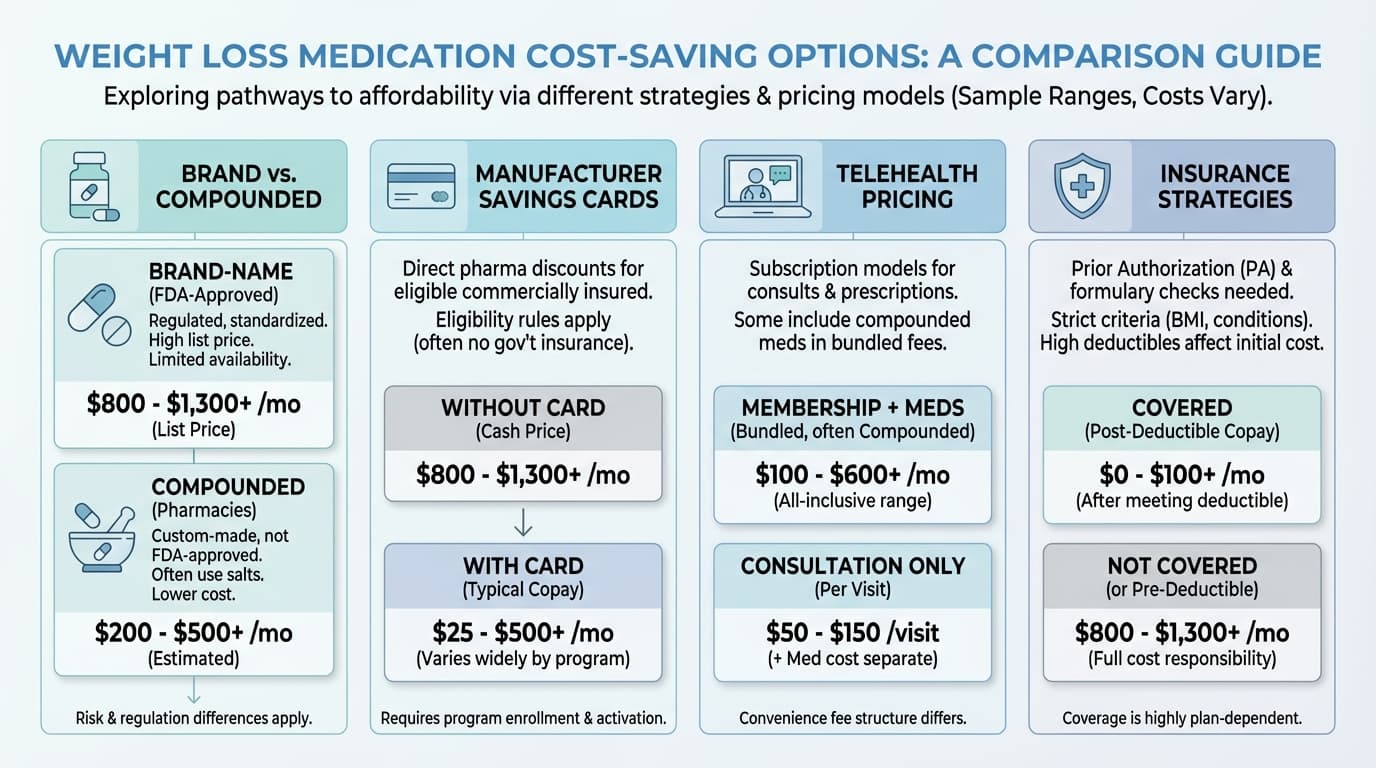
The biggest decision you'll face is choosing between FDA-approved brand medications and compounded versions. Brand names like Ozempic, Wegovy, Mounjaro, and Zepbound come with that hefty price tag, but they also come with guaranteed quality and consistent dosing.
Compounded versions can cost 60-80% less - we're talking $200-400 monthly instead of $1,000+. These are made by specialized pharmacies using the same active ingredients (semaglutide or tirzepatide). The catch? They're not FDA-approved as finished products, and quality can vary between compounding pharmacies.
Real talk: I've seen people have great success with both options. The key is finding a reputable compounding pharmacy if you go that route. Look for ones that are 503B registered with the FDA and have good track records.
Manufacturer Savings Programs That Actually Work
Here's where things get interesting. Most people don't realize that drug manufacturers offer savings cards that can slash your costs dramatically - if you qualify.
Novo Nordisk (maker of Ozempic and Wegovy) offers savings cards that can reduce your monthly cost to as low as $25. Eli Lilly (Mounjaro and Zepbound) has similar programs. But there's a catch - you typically can't use these if you're on Medicare, Medicaid, or certain other government insurance plans.
The application process is usually straightforward. You fill out a form online, get a savings card, and present it at the pharmacy along with your prescription. Some cards are good for up to two years, which can save you thousands.
What most people don't realize: these programs often have income limits or other restrictions that aren't immediately obvious. Read the fine print before getting your hopes up.
Telehealth Provider Pricing: Shop Around
Telehealth has opened up a whole new world for accessing these medications, and pricing varies wildly between providers. Some charge $99 monthly for consultations plus medication costs, while others bundle everything for a flat fee.
I've seen providers offering compounded semaglutide for $199 monthly (including consultation and medication), while others charge $400+ for similar services. The consultation fees alone can range from $50 to $200 per visit.
When comparing providers, ask about:- Total monthly costs (consultation + medication)- How often you need follow-up appointments- What's included in their monitoring- Whether they help with insurance prior authorizations- Their policy if you need to adjust doses
Some providers also offer package deals or discounts for paying several months upfront. Just make sure you're comfortable with the provider before committing to a long-term payment plan.
Insurance Strategies That Work
Getting insurance to cover weight loss medications is like solving a puzzle - frustrating but possible with the right approach. Most insurance companies are more likely to cover these meds if you have diabetes, but coverage for weight loss is becoming more common.
Your doctor can help by:
- Documenting your BMI and weight-related health conditions
- Trying "step therapy" medications first (usually required)
- Submitting prior authorization requests with strong medical justification
- Appealing denials with additional documentation
Here's the thing: even if your insurance covers the medication, your copay might still be $200-500 monthly. But that's still better than paying full price.
Some people have luck switching insurance plans during open enrollment to find better coverage. If you're employed, check whether your company offers different plan options with better prescription coverage.
Creative Cost-Cutting Strategies
Beyond the obvious approaches, there are some lesser-known ways to reduce costs:
Flexible dosing schedules: Some doctors will prescribe higher-strength pens that you can split into smaller doses, effectively doubling your supply. This only works with certain medications and dosing schedules, so discuss it with your provider.
Canadian pharmacies: While legally gray, some people order from licensed Canadian pharmacies at significant savings. Prices can be 40-60% lower than US pharmacies.
Patient assistance programs: Beyond manufacturer savings cards, some pharmaceutical companies offer need-based assistance programs for people who meet income requirements. These can provide free or heavily discounted medications.
Employer health programs: Some companies are starting to cover weight loss medications as part of wellness initiatives. Worth checking with HR if your company has progressive health benefits.
Finding Your [Savings Strategy](/savings)
The honest answer is that there's no one-size-fits-all solution. Your best approach depends on your insurance situation, income, location, and comfort level with different options.
Start by checking if you qualify for manufacturer savings programs - that's often the easiest win. If those don't work, explore reputable telehealth providers offering compounded options. Many people end up using a combination approach: starting with compounded medications to see how they respond, then switching to brand names if insurance coverage improves.
Remember that prices and programs change frequently. A savings card that works today might have different terms next year. Keep researching and don't hesitate to switch approaches if your situation changes.
The key is being persistent and creative. Yes, these medications are expensive, but with some effort, most people can find a way to make them more affordable than that scary sticker price suggests.