The Hidden Costs Nobody Warns You About with GLP-1s
Beyond the sticker price, there are sneaky expenses that can double your monthly GLP-1 costs. Here's what to budget for and how to avoid the surprises.
The Real Monthly Bill Goes Way Beyond Your Prescription
When I started my weight loss journey with GLP-1 medications, I thought I had my budget figured out. Insurance would cover part of it, I'd use a manufacturer coupon, and boom – manageable monthly cost. What I didn't expect? All the extras that nobody mentions upfront.
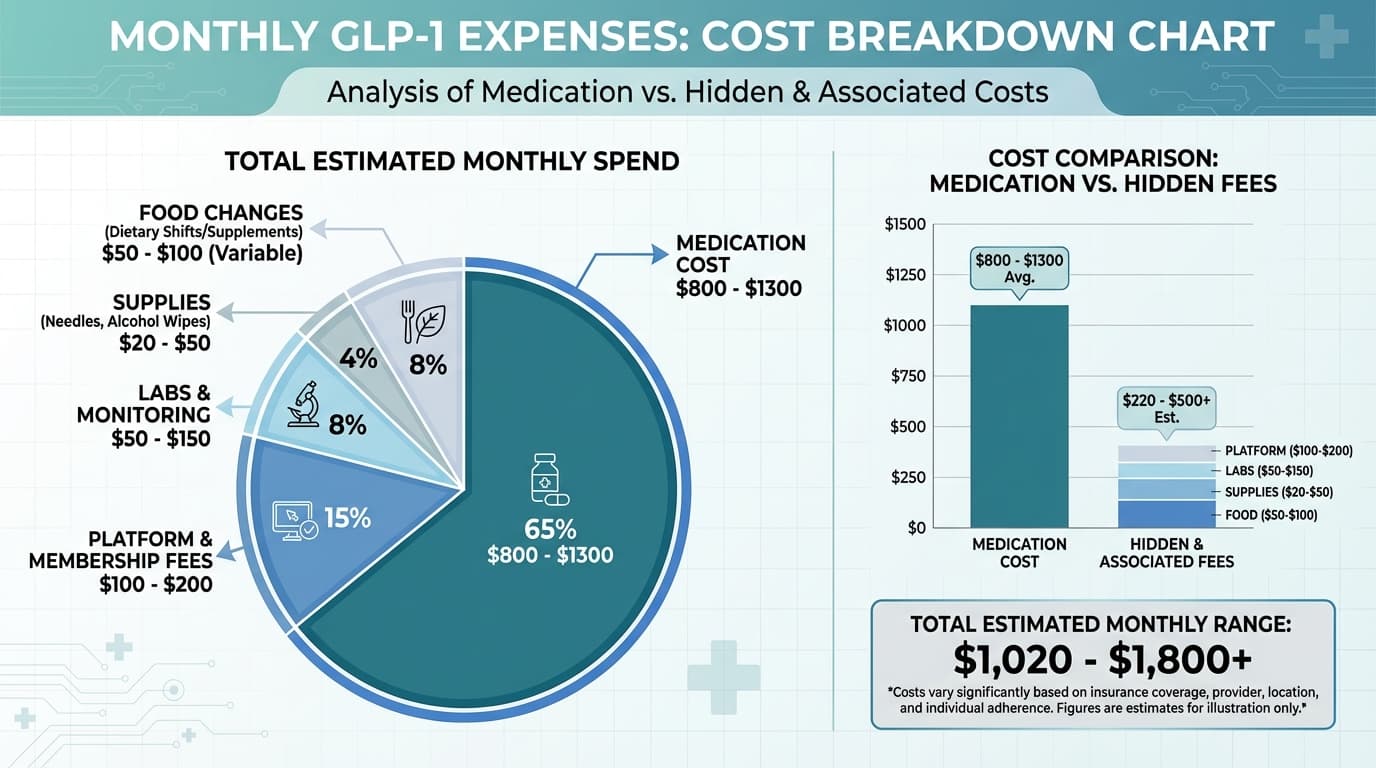
Real talk: that $25 copay or even that $200 monthly fee is just the beginning. The hidden costs can easily add another $50-150 to your monthly budget, and most people don't see them coming until they're already committed to treatment.
Needles, Alcohol Pads, and Other Supply Costs
Here's what caught me off guard first: the injection supplies. Most GLP-1 pens come with needles, but not always enough for the entire month. Ozempic and Wegovy typically include 4 needles per pen, which works if you're doing weekly injections. But what happens when you drop one or it gets damaged?
Replacement pen needles cost about $15-25 for a box of 100. Alcohol pads run another $10-15 monthly if you're buying the good ones. That's roughly $25-40 monthly just for supplies.
Some people also invest in a small cooler or medication travel case, especially if they travel for work. These range from $30-80 upfront, but it's worth factoring into your first-month costs.
The Lab Work Nobody Mentions
Before starting any GLP-1 medication, most doctors want baseline blood work. After a few months, they'll want follow-up labs to check how you're responding. This monitoring is actually smart medicine, but it's rarely included in those "cost calculators" you see online.
Without insurance, basic metabolic panels run $50-150 each time. With insurance, you might pay $20-50 in copays. Most doctors recommend labs every 3-6 months while you're on treatment, so budget accordingly.
Telehealth Platform Fees That Add Up
Many people turn to telehealth platforms for easier access to GLP-1 prescriptions. The advertising focuses on medication costs, but there are often additional fees:
- Monthly platform fees: $10-50
- Consultation fees: $50-200 per visit
- Shipping and handling: $10-25 monthly
- "Concierge" or "premium" support: $25-100 monthly
Some platforms bundle these costs, others charge separately. When you're comparing your options, make sure you're looking at the total monthly cost, not just the medication price.
Food Budget Changes (Yes, Really)
This one surprised me. GLP-1 medications dramatically reduce your appetite, which should mean lower grocery bills, right? Sometimes. But many people end up spending more on food, not less.
When you can only eat small portions, every bite needs to count nutritionally. That often means:
- Higher-quality proteins that cost more per serving
- Protein powders or supplements ($20-40 monthly)
- Smaller, more frequent grocery trips (which can lead to impulse purchases)
- More prepared or pre-portioned foods
The honest answer: some people save $50-100 monthly on groceries, others spend an extra $30-50. It depends on how you adapt your eating habits.
Insurance Quirks That Hit Your Wallet
Insurance coverage for GLP-1s is complicated, and there are costs that don't show up until you're actually filling prescriptions:
Step therapy requirements: Your insurance might require you to try (and pay for) other weight loss medications first. That could mean 2-3 months of paying for treatments that don't work before you get to the one you actually want.
Prior authorization delays: While you're waiting for approval, some people pay out of pocket to avoid interrupting treatment. That's an extra $800-1200 monthly during the gap.
Deductible timing: If you start treatment early in the year, you might hit your full deductible before insurance kicks in properly.
Smart Ways to Minimize These Hidden Costs
Now that you know what's coming, here's how to prepare:
Stock up strategically: Buy alcohol pads and backup supplies in bulk. Amazon and Costco have better prices than pharmacies.
Ask about lab bundling: Some doctors can order comprehensive panels that cost less than individual tests. Request quotes upfront.
Read telehealth fine print: Before committing, calculate the true monthly cost including all fees. Some platforms offer annual discounts that bring down the per-month cost.
Time your start date: If possible, start treatment after you've met some of your annual deductible. January starts can be expensive.
Consider pharmacy shopping: Call around for lab work and supply costs. Prices vary significantly between locations.
The One Cost That's Actually Worth It
Here's something positive: most people find the medication so effective that some other health-related costs actually decrease. Less eating out, fewer impulse food purchases, and sometimes reduced costs for other medications as health markers improve.
When you're looking at savings strategies, factor in the total picture. Yes, there are hidden costs, but many people find their overall health spending balances out or even decreases over time.
Budget Reality Check
Based on real experiences from our community, here's what to budget beyond your medication cost:
- Supplies: $25-40 monthly
- Labs: $20-50 every 3-6 months
- Platform fees: $0-50 monthly (if using telehealth)
- Food adjustments: -$50 to +$50 monthly
What most people don't realize: these costs often decrease over time. You'll get better at buying supplies efficiently, your lab frequency might decrease, and you'll adapt your food spending. The first few months are typically the most expensive beyond just the medication itself.
The key is going in with realistic expectations. Nobody likes financial surprises, especially when you're already stretching your budget for treatment that isn't always covered well by insurance.