Smart Ways to Cut Your GLP-1 Medication Costs
Beyond manufacturer coupons, there are lesser-known ways to slash your weight loss medication costs that most people never discover.
The Real Cost Problem Nobody Talks About
Your insurance denied coverage. The pharmacy quote made your jaw drop. That manufacturer savings card you found? It knocked off maybe $150, but you're still looking at $800+ monthly for your weight loss medication.
Here's what I wish someone had told me when I started this process: there are actual strategies that can cut your costs significantly, but most people stop looking after they hit the first roadblock.
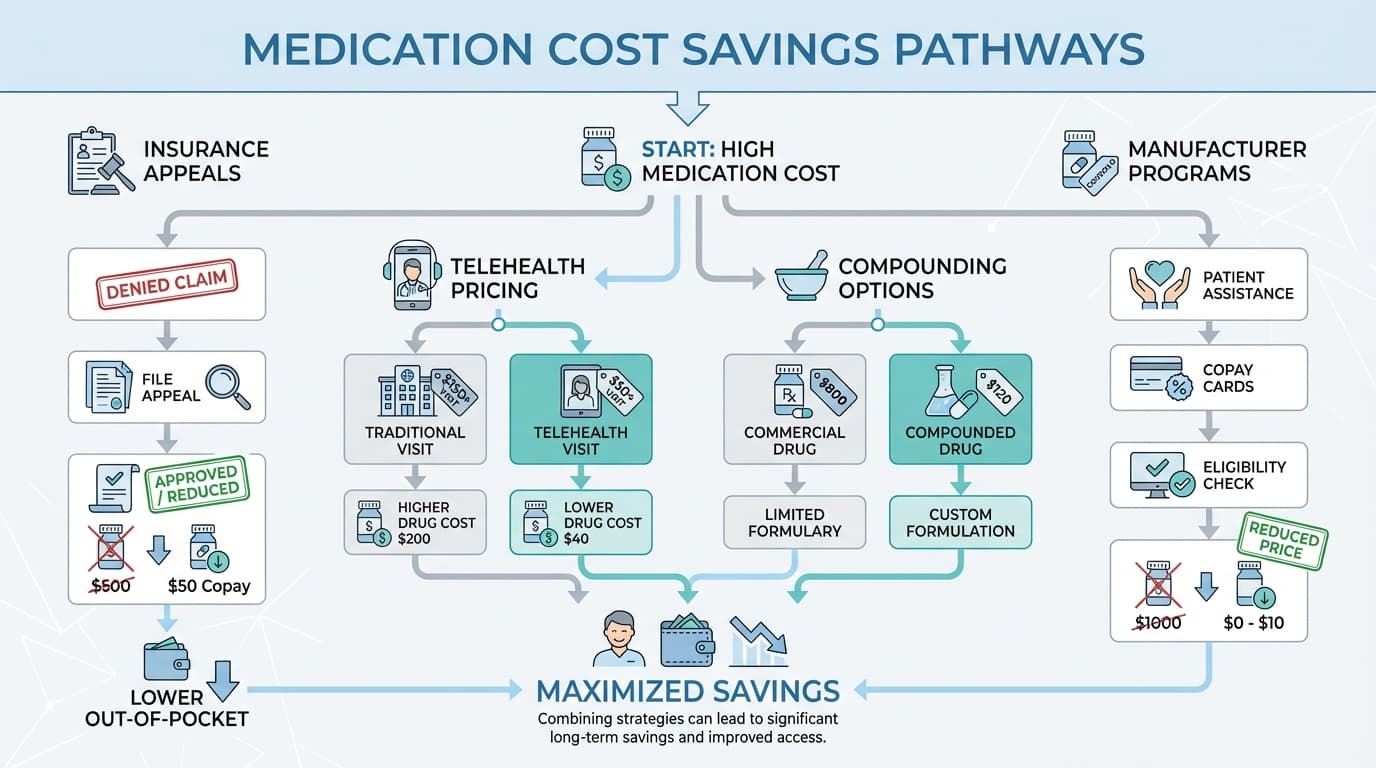
Timing Your Insurance Appeals Like a Pro
Real talk: most people give up after their first insurance denial. That's leaving money on the table.
The key is understanding that insurance companies often approve medications after multiple appeals, especially if you can document medical necessity. Here's what actually works:
Start documenting everything now - your weight, blood pressure, any diabetes markers, sleep issues, joint pain. Insurance wants to see that obesity is affecting your health in measurable ways.
Work with your doctor to try and fail on other treatments first. I know this sounds backward, but insurance often requires you to show you've tried older medications like metformin or phentermine before they'll cover newer options.
File your appeal within 30 days, and don't accept the first "no." Most insurance companies have multiple levels of appeals, and approval rates go up with each level.
The Telehealth Price Game
Not all telehealth providers charge the same amount - not even close. I've seen price differences of $200+ monthly for the exact same medication.
Some providers bundle everything into one monthly fee that includes the medication, consultations, and shipping. Others charge separately for each piece. Do the math on the total cost, not just the sticker price.
Here's something most people miss: some telehealth companies can access different pricing tiers from pharmacies than your local CVS or Walgreens. It's worth getting quotes from 3-4 different telehealth providers before you commit.
Watch out for providers that require 3-month or 6-month commitments upfront. Your insurance situation might change, or you might find a better deal.
When Compounding Makes Financial Sense
Compounded versions aren't right for everyone, but they can save you serious money if you understand what you're getting into.
The pricing varies wildly between compounding pharmacies. I've seen the same compound quoted at $200 from one pharmacy and $450 from another. Call around - it's worth the 30 minutes.
Compounded medications work best when you have a consistent relationship with one pharmacy. They can track your dosing, make adjustments, and often offer better pricing for repeat customers.
Be honest about your comfort level here. Some people want the exact same formulation every time and are willing to pay more for brand-name consistency. Others are fine with slight variations if it saves them $300 monthly.
Manufacturer Programs Beyond Basic Coupons
Most people know about the standard savings cards, but there are other manufacturer programs that can help.
Some companies offer hardship programs for people who don't qualify for traditional assistance but still can't afford full price. These aren't advertised widely, but they exist. Call the manufacturer directly and ask about patient assistance programs.
If you have commercial insurance that covers part of your medication, some manufacturer programs will cover your copay portion too. This can stack with your insurance coverage.
Here's a lesser-known tip: some manufacturers offer temporary bridge programs while you're appealing insurance coverage. This can keep you on your medication without a gap while you fight for coverage.
Playing the Pharmacy Game
Your medication price can vary by $100+ depending on which pharmacy you choose, even with insurance.
Costco's pharmacy often has lower cash prices, and you don't need a membership to use their pharmacy. Walmart's $4 generic program doesn't include GLP-1s, but their cash prices are sometimes competitive.
Some independent pharmacies can special-order medications at better prices than chains. It takes more legwork, but the savings can be substantial.
GoodRx and similar apps can help, but compare their prices with direct pharmacy quotes. Sometimes the cash price without any discount app is actually lower.
Insurance Strategy That Actually Works
If you're planning to change jobs or insurance plans, timing matters more than you think.
Some insurance plans have different formularies (lists of covered drugs) that might cover your specific medication. Research this before open enrollment if you have options.
HSA and FSA funds can pay for these medications, which effectively gives you a discount equal to your tax rate. If you're in a 22% tax bracket, that's real savings.
Some people have success getting coverage by working with an endocrinologist instead of their primary care doctor. Specialists sometimes have more influence with insurance approvals.
Making the Numbers Work Long-Term
The honest answer is that these medications are expensive, and there's no magic bullet that makes them free.
But small optimizations add up. Saving $50 here and $100 there can make the difference between affording your medication and not.
Set up a separate savings account specifically for your medication costs. Treat it like any other monthly bill, and you won't be caught off guard by the expense.
Some people find success with flexible dosing schedules that their doctor approves - maybe taking a slightly lower dose to make their supply last longer, or spacing out doses differently.
What Most People Don't Realize
The savings landscape for these medications changes frequently. New programs launch, insurance policies update, and pricing shifts.
What didn't work six months ago might work now. It's worth revisiting your options every few months, especially if your financial situation changes.
Don't assume that because one GLP-1 medication isn't covered, others won't be either. Insurance companies sometimes cover Mounjaro but not Wegovy, or vice versa. The medications work similarly, so switching might solve your cost problem.
The bottom line: reducing your medication costs takes some effort, but it's absolutely possible. Most people can find ways to save $200-400 monthly if they're willing to do the research and make some phone calls.